Storing Labels: Temperature, Humidity and Shelf Life
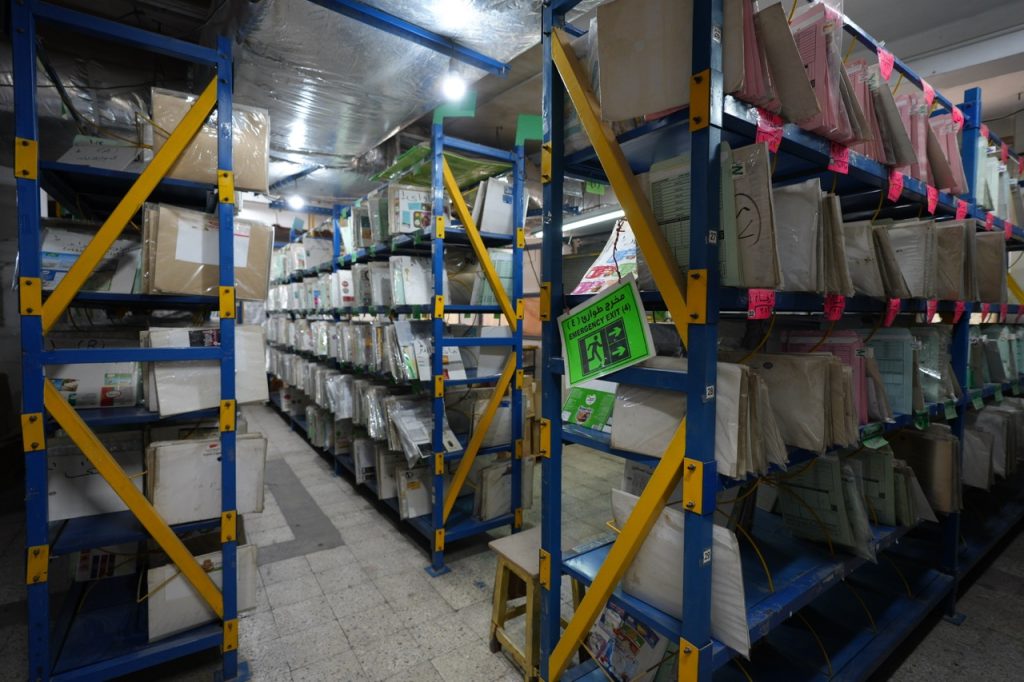
A roll that sat in a hot or damp store can curl, bleed adhesive or refuse to dispense, even if it was perfect on delivery. This guide sets out what the main label material manufacturers recommend, and what your warehouse and line teams can do about it.
Why does label storage matter?
Storage conditions change how labels behave on your line and on the pack. Paper absorbs and loses moisture, adhesives soften in heat and stiffen in cold, and film can pick up static. Most storage problems show up as curl, poor dispensing or weak adhesion, so they are often blamed on the label or the applicator rather than the store.
Avery Dennison’s European storage bulletin lists what can go wrong at each extreme:
- Cold: adhesives harden, reducing tack, and labels may not stick to bottles or containers, particularly if those are also cold (it highlights below 5°C). Plastic labels may not dispense because of static.
- Heat: adhesive may bleed from label edges and build up on dispensing rollers; PE and PVC labels can shrink slightly.
- High humidity: the backing paper expands, the reel tightens and can squeeze adhesive out, release force changes, and labels curl.
- Low humidity: paper curls and static builds up.
What temperature and humidity do label manufacturers recommend?
Manufacturers recommend moderate room conditions, around 20 to 25°C and roughly 40 to 60% relative humidity, but the exact ranges differ. Avery Dennison, HERMA and 3M each publish their own figures, summarised below. They apply to those companies’ materials, not universally.
- Avery Dennison (European storage bulletin) recommends storing its self-adhesive materials at 15 to 25°C and 35 to 65% relative humidity, with 22°C and 50% as the ideal. It adds that storage above 25°C “is generally problematic”.
- Avery Dennison (North American technical bulletin) recommends 22°C (72°F) and 50% relative humidity for both roll materials and finished labels, with the rule of thumb: “if you feel comfortable, so does the label.”
- HERMA says its self-adhesive materials are ideally stored in their original packaging “in a dark and dry place” at 20 to 25°C and 40 to 50% relative humidity. Its labels service page gives an ideal processing temperature of around 22°C and humidity of around 45%.
- 3M, in the data sheets for two of its label materials (7776 and 7850TL), says to store them at 16 to 27°C and 40 to 60% relative humidity in the original packaging, out of direct sunlight.
How long do labels last in storage?
There is no single shelf life for labels. It depends on the facestock, adhesive and liner, and each manufacturer states it per product, usually counted from the date the material was made. Ask your supplier for the figure on the data sheet of the exact material in your labels, and when it was manufactured.
For example:
- 3M advises using its polypropylene label material 7776 within 24 months from date of manufacture, and its durable label material 7850TL within 12 months, both “for best performance” under the storage conditions above.
- Avery Dennison’s North American bulletin says all pressure-sensitive materials “age at different rates”, that many labels will be useful “far beyond the standard printers one year warranty”, but that use beyond that point is the end user’s decision. It adds that using labels within six months of receiving them “is usually a good manufacturing process”.
- HERMA tells converters to use materials “first in, first out” and says “the shelf life must be taken into account”.
A material’s shelf life starts before your labels are printed, so less time remains on a finished roll. ETALEX does not publish a shelf-life statement for finished labels; agree expectations with whichever supplier prints yours.
How should you store label rolls in the warehouse?
Store labels sealed, off the floor, away from heat, light and damp, and use the oldest stock first. Manufacturers agree on these practical points even where their numbers differ, and most of them cost nothing to put in place in an existing store.
- Keep labels in their packaging. Avery Dennison says finished labels should stay in their boxes, and in any protective bags, “for as long as possible”, because this limits exposure to moisture, light, dirt and dust. HERMA advises unpacking material just before use.
- Keep rolls off concrete floors. Avery Dennison warns that moisture from concrete “will migrate into the finished rolls and weaken the paper”. Use pallets or shelving.
- Avoid heat and sunlight. Avery Dennison advises against storing materials close to the ceiling, where it is warmer, and never outdoors. HERMA warns that heat or direct sunlight can make film label stock brittle.
- Avoid knocks and pressure. HERMA lists avoiding knocks and pressure loads. Avery Dennison recommends that pallets of roll stock are stored one high.
- Rotate stock. Label each delivery with its receipt date and use first in, first out, as HERMA advises.
- Measure the store. An unconditioned warehouse can fall outside every range above; a simple temperature and humidity logger shows what your labels actually experience.
How long should labels be conditioned before use?
Conditioning means letting rolls reach the temperature and humidity of the room where they will be used, in their packaging, before unwrapping them. Manufacturers give different times: Avery Dennison mentions 24 to 72 hours and 24 to 48 hours in different contexts; HERMA asks for “enough time for acclimatisation” without a fixed figure.
Avery Dennison’s European bulletin says some effects of poor storage “are reversible if materials are stored under the correct conditions for 24/72 hours before use”, but the effects of high temperatures “are not recoverable”. Its North American bulletin recommends 24 to 48 hours in the pressroom for roll stock before converting, a printer’s step, but the principle applies on your line too.
In practice, move the next shift’s labels to the line area in advance, not straight from a cold store or delivery truck, a pattern Avery Dennison flags as a common problem.
| Manufacturer document | Storage temperature | Relative humidity | Shelf life or use-by guidance | Conditioning |
|---|---|---|---|---|
| Avery Dennison, European label storage bulletin | 15 to 25°C (ideal 22°C) | 35 to 65% (ideal 50%) | Not stated; storage above 25°C “generally problematic” | Some effects reversible after 24/72 hours in correct conditions |
| Avery Dennison, North American technical bulletin | 22°C (72°F) | 50% | Use within six months of receipt “usually a good manufacturing process” | 24 to 48 hours in the pressroom before converting (roll stock) |
| HERMA, storage and climate conditions (materials) | 20 to 25°C | 40 to 50% | “The shelf life must be taken into account”; first in, first out | “Enough time for acclimatisation” |
| HERMA, storage and processing (labels) | Around 22°C (processing) | Around 45% | Not stated | Avoid variations in climate |
| 3M, data sheets 7776 and 7850TL | 16 to 27°C | 40 to 60% | Within 24 months (7776) or 12 months (7850TL) of manufacture | Not stated |
Sources: Avery Dennison, HERMA and 3M documents listed under Sources. Figures apply to those manufacturers’ materials only.
What should you ask your label supplier about storage?
Ask for the facts that apply to your labels rather than general figures. The material manufacturer’s data sheet states recommended storage conditions and shelf life, and your supplier can request it and advise whether your storage conditions call for a different material.
- Which facestock, adhesive and liner are in my labels? Can I see the data sheets?
- What storage conditions and shelf life does the material manufacturer state?
- How will rolls be packed, and how long should they condition before use?
- Does my cold, hot or humid environment call for a different material?
Our guide to self-adhesive label materials explains facestock, adhesive and liner; waterproof, freezer and chemical-resistant labels covers cold and wet conditions after application; our label quote checklist covers the full specification.
ETALEX has printed labels in Cairo since 1952, in-house with letterpress (flat and rotary), rotary offset, flexography, silk screen and digital printing, with hot stamping and embossing. Our management systems are certified to ISO 9001, ISO 14001 and ISO 45001, with GMP and HACCP, by ABS Global. See our self-adhesive labels and the industries we serve.
Frequently asked questions
What is the best temperature to store labels? Answers differ slightly. Avery Dennison names 22°C and 50% relative humidity as ideal, HERMA recommends 20 to 25°C and 40 to 50%, and 3M’s data sheets say 16 to 27°C and 40 to 60%. Follow the data sheet for your material.
Do labels expire? Label materials have a manufacturer-stated shelf life, which differs by product: 3M, for example, gives 24 months for one material and 12 months for another. After that, adhesion and dispensing may no longer match the data sheet. Ask your supplier for the figure that applies.
Can labels be stored in a cold room? It is not recommended. Avery Dennison warns that cold hardens adhesives and reduces tack, and that storage below 15°C without conditioning can cause problems. If labels must be kept cold, condition them in their packaging at line temperature before use.
Why are my labels curling? Usually humidity. Avery Dennison explains that paper fibres contract in dry air and expand in damp air, causing curl either way. Keep rolls sealed and humidity stable.
Sources
- ETALEX, About page. https://www.etalex.com/about/. Accessed 8 October 2026 (live page). Used for: established in Cairo in 1952; letterpress in flat and rotary, rotary offset, flexography, silk screen, digital printing and hot stamping; ISO 9001, ISO 14001, ISO 45001, GMP and HACCP by ABS Global. The page contains no storage or shelf-life statement.
- Avery Dennison Label and Packaging Materials (Europe), “Label storage: conversion issues and dispensing issues” (technical bulletin, PDF). https://label.averydennison.com/content/dam/averydennison/lpm-responsive/europe/english/documents/technical-bulletins/product/compliance/certificates/recommendations/compliance-label-storage-conditions-conversion-dispensing.pdf. Accessed 8 October 2026. Used for: storage at 15 to 25°C and 35 to 65% relative humidity, ideal 22°C and 50%; storage above 25°C generally problematic; some effects reversible after 24/72 hours in correct conditions, high-temperature effects not recoverable; storage below 15°C without conditioning problematic; “truck to press” problem; effects of cold, heat, high and low humidity on conversion and dispensing (below 5°C tack loss; adhesive bleed; PE and PVC shrinkage; curl; static).
- Avery Dennison (North America), “Storage Conditions for Pressure-Sensitive Materials and Finished Labels” (Technical Marketing Bulletin, 02/2026, PDF). https://label.averydennison.com/content/dam/averydennison/lpm-responsive/na/doc/technical-bulletins/technical%20marketing%20bulletins/storage-conditions-technical-bulletin.pdf. Accessed 8 October 2026. Used for: 22°C (72°F) and 50% relative humidity for roll stock and finished labels; clean, dry storage; pallets one high, not on concrete floors, not near the ceiling, never outdoors; 24 to 48 hours in the pressroom before converting; finished labels kept in boxes and pouches; moisture from concrete weakens paper; “if you feel comfortable, so does the label”; materials age at different rates; standard one-year printer warranty; use within six months of receiving.
- HERMA, “Optimal storage and climate conditions” (HERMA Self-adhesive Material service page). https://www.herma.com/material/service/optimal-storage-and-climate-conditions/. Accessed 8 October 2026. Used for: storage in original packaging in a dark, dry place at 20 to 25°C and 40 to 50% relative humidity; time for acclimatisation; unpack just before converting; film brittleness from sunlight or heat; first in, first out; shelf life to be taken into account.
- HERMA, “Information on storage and processing” (HERMA Labels service page). https://www.herma.com/label/service/information-on-storage-and-processing/. Accessed 8 October 2026. Used for: keep labels in original packaging in a cool place; ideal processing temperature around 22°C and humidity around 45%; keep dry; avoid climate variations, direct sunlight, knocks and pressure loads.
- 3M, “Technical Data Sheet: 3M Polypropylene Label Material 7776” (V-5, December 2025, PDF). https://multimedia.3m.com/mws/media/2399673O/3m-polypropylene-label-material-7776.pdf. Accessed 8 October 2026. Used for: store at 16 to 27°C and 40 to 60% relative humidity in original packaging, out of direct sunlight; use within 24 months from date of manufacture.
- 3M, “Technical Data Sheet: 3M Durable Label Material 7850TL” (September 2024, PDF). https://multimedia.3m.com/mws/media/2399665O/3m-durable-label-material-7850tl.pdf. Accessed 8 October 2026. Used for: same storage conditions; use within 12 months from date of manufacture.
Written by
Etalex Team
Content & Editorial Team
Practical guidance on label printing, finishing, materials and packaging, informed by Etalex's manufacturing experience in Cairo since 1952.
Related guides
Guides
How Labels Are Made: From Artwork to Finished Roll
Key answer Most self-adhesive labels are made in one continuous sequence. Artwork is checked and prepared in pre-press and approved as a proof, then plates…
Materials & Technology
What Is a Pressure-Sensitive Label? Construction and Adhesive Types
Key answer A pressure-sensitive label is a label whose adhesive is already tacky and sticks to a surface with light hand or machine pressure, with…
Materials & Technology
What Is Flexographic Printing? Process, Strengths and Limits
Key answer Flexographic printing (flexo) is a relief printing process. A flexible plate with a raised image is inked by an engraved anilox roller, which…
Talk to the Etalex team
Ready to discuss your labels?
Send the size, quantity, material, finish and container, with artwork if you have it. Our team in Cairo replies during working hours, Sunday to Thursday.