Label Printing Cost: What Drives the Price
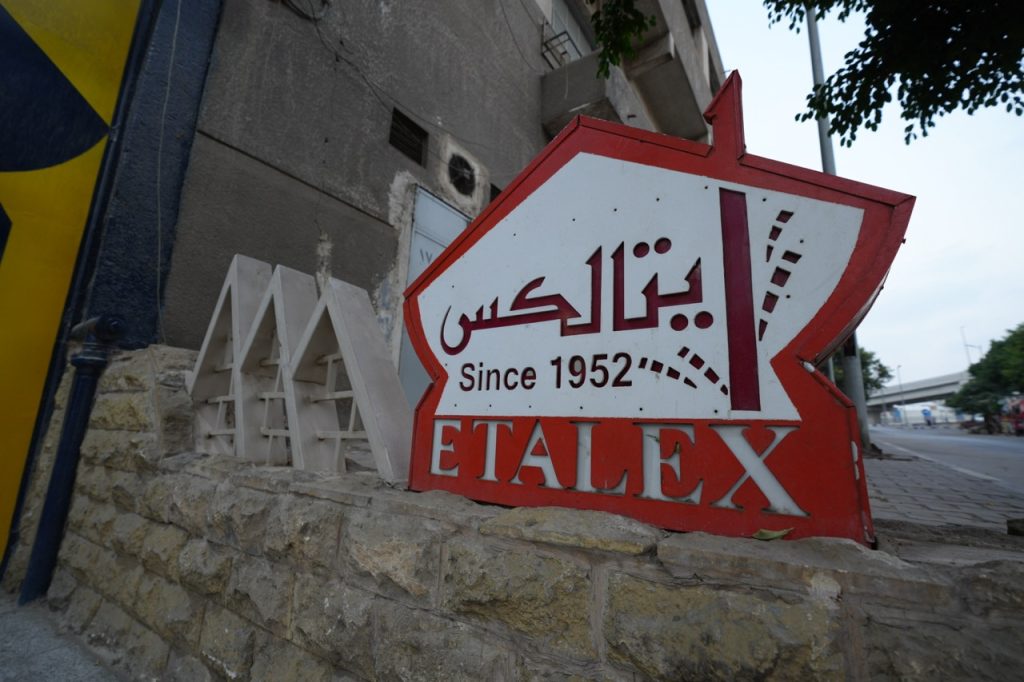
ETALEX has manufactured printed labels in Cairo since 1952. When two quotes for “the same label” differ, it is usually because they are not the same label. This guide explains what drives custom label cost in general terms, so you can compare quotes fairly. It does not quote prices: every job is priced on its own specification.
Why is there no standard price for a label?
There is no standard price because there is no standard label. Each quote combines one-off costs, such as artwork preparation, plates and cutting tools, with running costs, such as material, ink and press time. How these combine depends on your quantity, design, material, finishes and delivery, so the same word “label” can describe very different jobs.
- Set-up (fixed) costs are paid once per design or job: artwork preparation, plates, cutting dies and press set-up.
- Running (variable) costs grow with every label: facestock, adhesive, liner, ink, foil, press time and waste.
On small quantities set-up dominates; on large ones, running costs do.
How do quantity and run length affect label printing cost?
Quantity is usually the biggest single driver of unit cost. Set-up costs are shared across every label in the run, so a longer run spreads them more thinly. Running costs do not disappear, but the fixed share per label falls as quantity rises. That is why unit prices on a quote normally drop at higher quantity breaks.
Esko, a prepress software company, notes that “flexo’s upfront plate costs can be spread across the length of the run”, and as volumes increase “that can make flexo more economical despite the additional setup”.
Ordering far more than you need is not automatically cheaper. Mark Andy, a label press manufacturer, notes that neither printer nor brand owner wants “to assume the cost associated with holding extra label stock”. Artwork changes, and stock ties up cash, so quote the quantities you will use.
Why do several designs or versions cost more than one?
Each design, flavour, language or size is a separate version, and in plate-based printing each version can need its own plates and press set-up. So ten designs of a thousand labels usually cost more to produce than one design of ten thousand, even though the total quantity is identical.
Mark Andy names “SKU variety” as “one of the top reasons labels are ordered and produced in smaller quantities”, and describes the time lost “changing out flexo plates for each variation”. Sharing a common background, keeping one size across the range, or printing versions digitally can all help. Tell your printer how many versions there are and what changes between them.
How do size, shape and material change the price?
Size and material set how much stock a job consumes; shape sets the cutting tool and the waste. A larger label uses more facestock, adhesive and liner. Film facestocks and speciality papers usually cost more than standard paper, and adhesives for difficult surfaces or conditions usually cost more than general-purpose ones.
A simple rectangle or circle may use an existing cutting die, while an unusual outline may need a new one and can nest less efficiently, leaving more waste. The right material is the one your pack needs, not the cheapest: a label that lifts or smudges costs more than a better facestock. Our guide to self-adhesive label materials explains facestock, adhesive and liner choices.
How do colours, print process and finishes affect cost?
More colours usually mean more set-up: in plate-based processes each colour typically needs its own plate and ink station. The print process sets the balance between set-up and running cost, and finishes such as hot stamping, embossing, varnish or lamination each add tooling, material or an extra pass. Specify only the effects the design really needs.
Colours. Spot colours give exact brand shades, but each needs its own ink, and changing inks takes press time. Esko links reducing reliance on spot inks to fewer “frequent press wash-ups”. If a process-colour match is acceptable, ask whether it changes the quote.
Print process. Esko notes that “plate-based or cylinder-based methods involve more preparation before production begins”, while “digital removes the need for plates, making it attractive for short runs”. The trade-off runs the other way at volume: it also observes that “digital inks can be considerably more expensive than conventional flexo inks”. HP, a digital press maker, says digital can “produce short runs more economically due to eliminating makeready and plate costs”. Our guide to label printing methods compares the processes in detail.
Finishes. Hot stamping needs a die and foil, embossing needs a matched tool, and varnish or laminate adds material and a process step. See our embossed labels page for examples.
What one-off costs come with a new label?
New labels can carry one-off costs that repeat orders often do not: preparing artwork for press, proofing, printing plates and cutting dies. Once made, plates and dies can usually be kept for reprints if the artwork and shape stay the same. Ask each supplier to show one-off items separately so you can compare the recurring cost fairly.
Esko describes flexo prepress as “all the technical preparation work that happens between receiving a design file and producing a press-ready flexographic printing plate”, and warns that “errors compound as they move downstream”. Press-ready artwork, with correct dimensions, bleed and colour references, avoids rework; a late change can mean new plates. Ask whether a revision on a repeat order triggers new tooling.
Do variable data, roll format and delivery change the price?
Yes. Variable data, such as serial numbers, batch codes or personalised text, needs either a digital process or a separate imprinting step, and must be checked label by label. Roll format sets how the finished labels are slit, wound and packed for your applicator. Delivery adds packing, transport and, for urgent jobs, scheduling cost.
Variable data. HP says digital printing lets each print differ “without individual set up costs”. Tell your printer whether codes are printed at the press or added at your line.
Roll format. Core size, roll diameter, labels per roll and winding direction affect finishing and packing; smaller rolls mean more handling. Machine-applied labels must match the applicator exactly.
Delivery and timing. Split deliveries, export packing and tight deadlines add work. A realistic date, given early, helps scheduling.
Which cost drivers should you specify for an accurate quote?
Tell your printer every driver below, even if some answers are “not sure”. A quote can only be as precise as the specification behind it, and two quotes are only comparable when both suppliers priced the same label. The table shows what each driver affects and what to send.
| Cost driver | Why it matters | What to tell your printer |
|---|---|---|
| Quantity and run length | Set-up is spread across the run; split runs repeat set-up | Total quantity, quantity per order, expected repeat orders |
| Designs and versions | Each version can need its own plates and set-up | Number of versions and which elements change |
| Size and shape | Sets material use, waste and whether a new die is needed | Width, height, corner radius or outline drawing |
| Material and adhesive | Facestock, adhesive and liner are running costs | Container, surface, conditions in use and storage |
| Number of colours | Each colour adds a plate, ink and set-up | Colours, spot or process, any brand colour references |
| Print process | Sets the balance of set-up and running cost | Leave it open, or state your preference and why |
| Finishes | Foil, emboss, varnish or laminate add tooling or passes | Each effect and where it sits on the label |
| Tooling (plates, dies) | One-off cost for new artwork or shapes | Whether this is a new label or a repeat, and any changes |
| Variable data | Needs digital printing or a separate step and checks | What changes label to label and where it is added |
| Roll or application format | Affects slitting, winding and packing | Hand or machine application, core, roll size, direction |
| Delivery and timing | Split deliveries and urgent dates add work | Delivery location, schedule and required date |
Sources: Esko; Mark Andy; HP (see Sources).
Our label quote checklist turns this into a full specification you can send to any supplier.
How can you compare label quotes fairly?
Compare quotes only after checking that each supplier priced the same specification. Line up material, adhesive, colours, finishes, quantity, versions, roll format and delivery, then separate one-off tooling from the recurring cost. A lower figure that leaves out a finish, uses a different material or excludes tooling is not a saving.
ETALEX prints in-house with letterpress (flat and rotary), rotary offset, flexography, silk screen and digital printing, with hot stamping and embossing for finishing, and holds ISO 9001, ISO 14001, ISO 45001, GMP and HACCP certification from ABS Global. See our printing technologies, self-adhesive labels and services, and how to choose a label manufacturer.
Frequently asked questions
How much does label printing cost? It depends on the specification: quantity, versions, size, material, colours, process, finishes, tooling and delivery. A figure given without those details is a guess.
Why is my unit price lower at higher quantities? Because one-off costs such as plates, dies and set-up are shared across more labels. Material and ink still apply to every label, so the unit price falls but not indefinitely.
Is digital printing cheaper than flexography? Neither is always cheaper. Digital avoids plates, which suits short runs and many versions; plate-based processes spread set-up across longer runs. The best choice depends on your quantities, versions and finishes.
Why does a reprint sometimes cost less than the first order? Plates and cutting dies made for the first order can often be reused if the artwork and shape are unchanged, so a repeat may avoid those one-off costs. Ask your supplier how tooling is handled on reprints.
Sources
- ETALEX, About page. https://www.etalex.com/about/. Accessed 8 October 2026 (live page). Used for: established in Cairo in 1952; letterpress in flat and rotary, rotary offset, flexography, silk screen, digital printing and hot stamping; ISO 9001, ISO 14001, ISO 45001, GMP and HACCP by ABS Global.
- Esko (Alexandra Blanck), “Flexo vs. Other Printing Methods: How Do They Compare?”, 22 September 2026. https://www.esko.com/en/blog/flexo-vs-other-printing-methods-how-do-they-compare. Accessed 8 October 2026. Used for: flexo plate costs spread across the run; flexo more economical as volumes increase despite set-up; plate-based methods need more preparation; digital removes plates and suits short runs and multiple versions; digital inks can be considerably more expensive than flexo inks.
- Esko (Alexandra Blanck), “What Is Flexo Prepress? A Complete Guide”, 15 June 2026. https://www.esko.com/en/blog/flexo-prepress-full-guide. Accessed 8 October 2026. Used for: definition of flexo prepress as the work between design file and press-ready plate; errors compound downstream.
- Esko, “Equinox Extended Gamut Printing” product page. https://www.esko.com/en/products/equinox. Accessed 8 October 2026. Used for: reducing reliance on spot inks cuts ink inventory and the need for frequent press wash-ups.
- Mark Andy, “Why Brand Owners are Demanding Shorter Run Lengths”, 2 February 2017. https://www.markandy.com/news/why-brand-owners-are-demanding-shorter-run-lengths/. Accessed 8 October 2026. Used for: SKU variety as a top reason for smaller label orders; changing flexo plates for each variation; neither party wants the cost of holding extra label stock.
- HP (Jolene Dobbin), “HP Indigo Digital Press: A Complete Overview”, 29 October 2020. https://www.hp.com/us-en/tech-takes/printing/explainer/hp-indigo-press-overview.html. Accessed 8 October 2026. Used for: short runs more economical by eliminating makeready and plate costs; each print can differ without individual set-up costs.
Written by
Etalex Team
Content & Editorial Team
Practical guidance on label printing, finishing, materials and packaging, informed by Etalex's manufacturing experience in Cairo since 1952.
Related guides
Guides
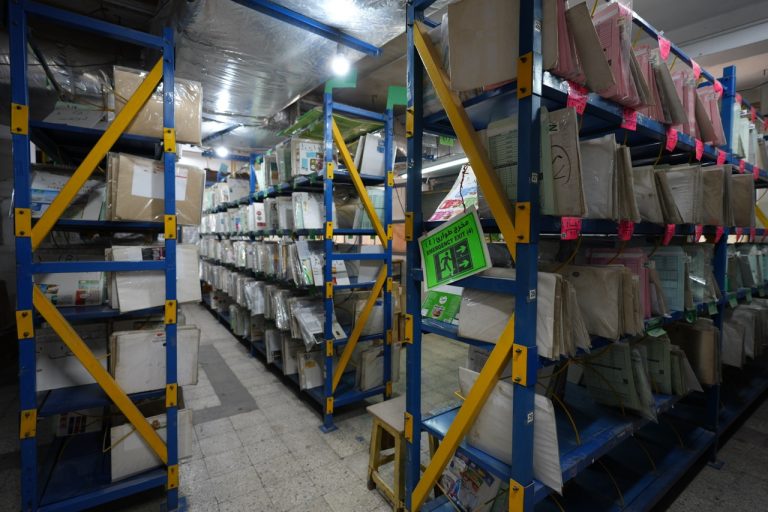
Storing Labels: Temperature, Humidity and Shelf Life
Key answer Good label storage means keeping rolls sealed in their original packaging, in a clean, dry, dark place at moderate room temperature and humidity,…
Guides
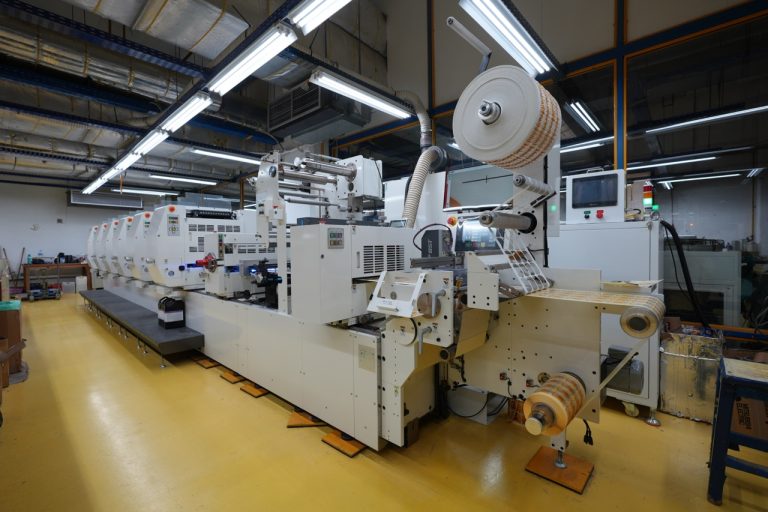
How Labels Are Made: From Artwork to Finished Roll
Key answer Most self-adhesive labels are made in one continuous sequence. Artwork is checked and prepared in pre-press and approved as a proof, then plates…
Materials & Technology
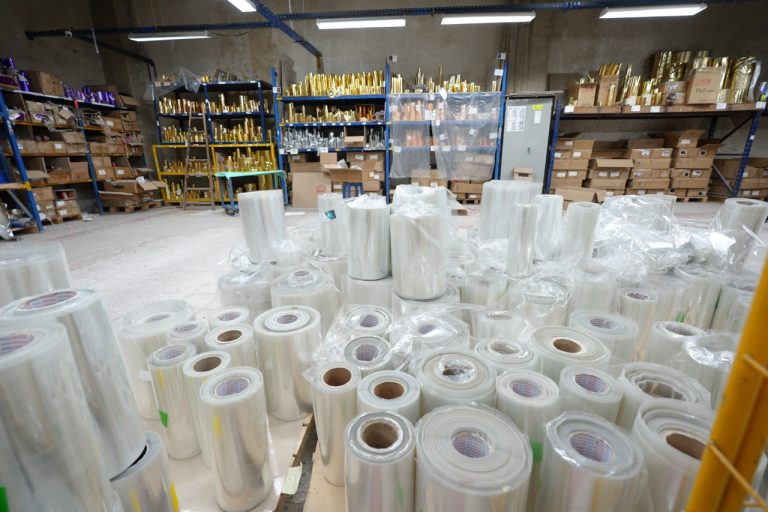
What Is a Pressure-Sensitive Label? Construction and Adhesive Types
Key answer A pressure-sensitive label is a label whose adhesive is already tacky and sticks to a surface with light hand or machine pressure, with…
Talk to the Etalex team
Ready to discuss your labels?
Send the size, quantity, material, finish and container, with artwork if you have it. Our team in Cairo replies during working hours, Sunday to Thursday.