Beverage and Water Bottle Labels: Wet Conditions, Condensation and Adhesion
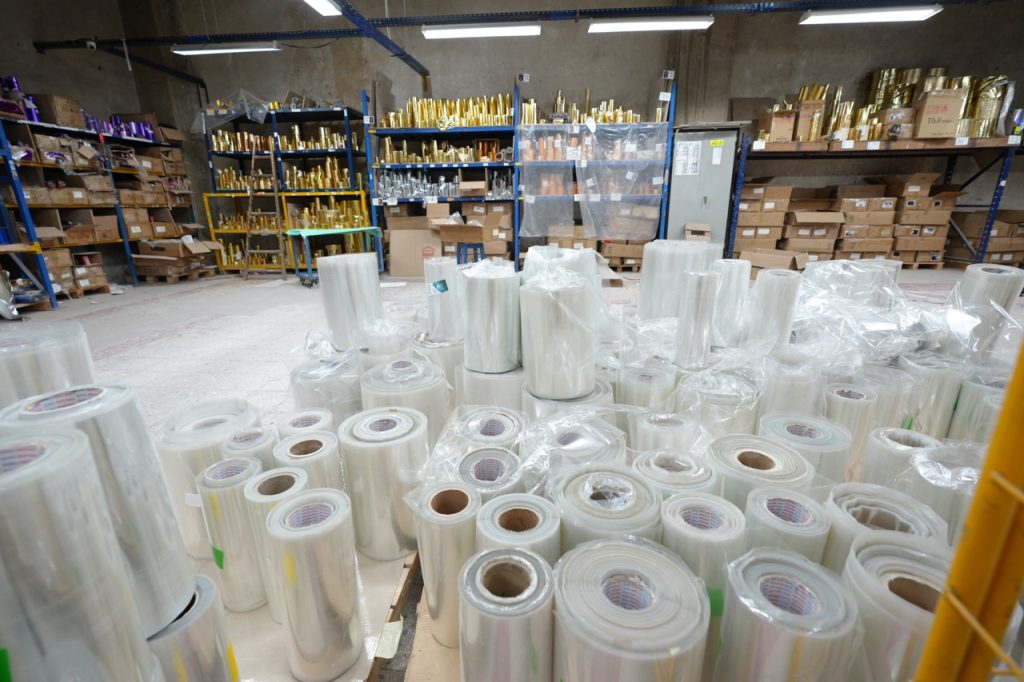
ETALEX has manufactured printed labels in Cairo since 1952. Our food and beverage labels page explains how we choose label materials for the conditions a pack meets, from frozen food to humid storage. This guide covers what to check for water, soft drink and other beverage bottles.
Why do labels fail on cold and wet bottles?
Two things work against the label: cold and water. Avery Dennison’s technical bulletin on cold and wet bottles explains that cold makes pressure-sensitive adhesives firm and lowers their initial tack, and that a label “will not stick to water (condensation)”. Bottles filled cold and labelled in a warmer room collect condensation exactly where the label goes on.
The problem continues after labelling. FINAT, the European label association, published Avery Dennison’s account that bottles often drop below ambient temperature during application, and that the temperature difference “can lead to surface condensation problems and a weakened bond between label and bottle”, with inconsistent label positioning and higher scrap.
Once bottles are in a fridge, cold box or ice bucket, the label also meets standing water and low temperatures for hours. Wet conditions can also affect appearance: Avery Dennison lists an adhesive technology designed specifically for “reducing the loss of opacity in wet conditions”.
Can you label a bottle that has condensation on it?
Sometimes, but only within limits. Avery Dennison makes adhesives for cold and wet application, yet its bulletin warns that such an adhesive “can only adhere to certain levels of surface water”, and if the surface becomes too wet “the label will slide and fail to adhere”. Drying the bottle at the point of application remains essential.
The same bulletin recommends practical line set-up steps:
- Air knives. Use them in any wet labelling situation, placed as close to the label peel blade as possible, so the surface is as dry as possible at first contact.
- Leading edge contact. The leading edge of the label must make good contact with the bottle; a label that slides or skews at contact will fail.
- Material flexibility. More flexible label materials tended to perform better, and an overlaminate can stiffen the label too much for smaller bottles.
Ask your label printer which adhesive is intended for your filling temperature, and tell them whether bottles are brought up to room temperature before labelling or labelled straight from a cold filler.
Which label materials suit water and beverage bottles?
Film facestocks are often chosen where moisture is expected, and the adhesive must suit both the bottle material and the temperatures. Avery Dennison’s craft beer guide says film labelstocks deliver improved abrasion resistance and “ultimate moisture resistance”. Polypropylene (PP) labels are waterproof, while paper labels are not (ETALEX cosmetics page).
Points to raise with your label printer:
- Bottle material. Avery Dennison’s facestock guide classes PET and glass as high-energy surfaces that labels adhere to more easily, and HDPE, PP and LDPE as low-energy surfaces that labels remove from more easily. Tell your printer exactly what the bottle is made of.
- Clear “no-label” look. The same guide says PP is frequently used in beer and beverage labels where high clarity is needed, and that on glass bottles a conformable film can give high clarity with no trapped air bubbles.
- Squeezable bottles. Bottles that are squeezed in use need a conformable film. Our guide to labels for small bottles covers conformable materials for curved and flexible containers.
- Bottle coatings. Avery Dennison notes that adhesion levels vary with the type and thickness of a bottle’s anti-scratch coating.
Our guide to self-adhesive label materials explains facestock, adhesive and liner in more depth.
What changes for returnable bottles and water gallons?
Returnable bottles need a deliberate choice: a label that washes off cleanly in the bottle washer, or one that survives repeated washing. Avery Dennison’s adhesive guide lists wash-off adhesives for returnable glass bottles and, separately, an ultra-permanent adhesive for returnable bottles or water gallons that withstands up to 30 product life-cycles, including caustic washing.
Decide which behaviour you need before you specify the label, because the two requirements are opposites:
- Label removed at every cycle. Ask for a wash-off construction suited to your bottle washer’s temperature and process.
- Label stays for the life of the container. Ask for a permanent construction tested against your washing process.
How should you test beverage labels before a full run?
Test the finished label on your real bottles, under your real filling conditions, then put labelled bottles through the conditions they will meet. Avery Dennison recommends applying sample labels under normal filling room conditions to check adhesion and lay-down, then testing labelled bottles for ice bucket, refrigeration and scuff resistance.
Allow time before judging the result. Avery Dennison notes that full label adhesion is usually reached 72 hours after bottles are labelled. Use the table to plan your trial with your label printer.
| Condition | What can go wrong | What to check in the trial |
|---|---|---|
| Cold filling, condensation at labelling | Label slides, skews or fails to stick | Air knife position; leading-edge contact; adhesive’s minimum application temperature |
| Refrigeration or cold box | Edges lift; label loosens over time | Recheck adhesion after storage, not only at the line |
| Ice bucket or ice chest | Label loosens; paper loses opacity when wet | Soak labelled bottles in ice water and inspect |
| Handling and transport | Scuffed print | Rub test on labelled bottles after chilling |
| Returnable bottles | Label will not wash off, or washes off too early | Run sample bottles through your washing process |
| Low-energy plastic bottles (HDPE, PP) | Weaker adhesion than on glass or PET | Trial on the exact bottle material |
Sources: Avery Dennison technical bulletin, craft beer guide, adhesive guide and facestock guide; FINAT (see Sources).
What should you tell your label manufacturer?
Describe the bottle, the filling line and every condition the labelled bottle meets, from filling to the consumer’s fridge. Include the bottle material and coating, filling temperature, whether condensation forms at labelling, how bottles are chilled and stored, and whether they are returnable. These facts decide the adhesive and facestock.
- Bottle material, shape, diameter and any coating.
- Filling temperature and labelling room conditions.
- Whether bottles are dried or warmed before labelling, and how.
- Storage and use: refrigeration, ice, cold box, outdoor sale.
- Single-use or returnable, and the washing process if returnable.
- Label size, quantity, number of versions and finish.
- Labelling machine and application method.
Beverage labels also carry food information. Under EU Regulation 1169/2011, mandatory information must be “clearly legible and, where appropriate, indelible”, and for drinks above 1.2% alcohol by volume the strength appears in the same field of vision as the name and net quantity. Check the rules for each market with your regulatory adviser. For storage conditions, food contact and legibility questions across all food packs, see our planned guide to food packaging labels. Our label quote checklist covers the full specification, and our self-adhesive labels page shows the label types we supply.
Frequently asked questions
Why do labels fall off cold drink bottles? Cold bottles collect condensation, and a self-adhesive label will not stick to water. Cold also makes adhesives firmer and less tacky. In an ice bucket or fridge, the label then meets water and low temperatures for hours. Dry the bottle at application, choose an adhesive for cold and wet use, and test after chilling.
Are paper labels suitable for water bottles? Ordinary paper labels are not waterproof, so they suit bottles that stay dry. Where bottles are chilled, iced or handled wet, consider a waterproof film such as polypropylene. Whichever material you choose, test labelled bottles in ice water and refrigeration before ordering a full run.
How long does a bottle label take to reach full adhesion? Avery Dennison’s craft beer guide notes that full label adhesion is usually reached about 72 hours after bottles are labelled. Before then the bond is still building. Judge adhesion trials after that period as well as at the line, and repeat checks after the bottles have been through refrigeration or ice.
Can labels be applied to wet bottles? Only within limits. Adhesives designed for cold and wet application can cope with some surface moisture, but if the surface is too wet the label slides and fails to adhere. Avery Dennison recommends air knives placed just before the label peel point so the bottle is as dry as possible at first contact.
Sources
- ETALEX, Food and Beverage page. https://www.etalex.com/food-beverage/. Accessed 5 October 2026. Used for: Cairo since 1952; material chosen for the conditions; performance from frozen food to humid storage.
- ETALEX, Cosmetics page. https://www.etalex.com/cosmetics/. Accessed 5 October 2026. Used for: polypropylene labels waterproof and oil resistant; paper labels not waterproof and suited to packs kept dry.
- Avery Dennison, “Z3338 Adhesive Technical Overview: Application Recommendations” (technical bulletin, PDF). https://label.averydennison.com/content/dam/averydennison/lpm-responsive/na/doc/technical-bulletins/technical%20marketing%20bulletins/z3338-technical-bulletin.pdf. Accessed 5 October 2026. Used for: cold lowers initial tack; labels will not stick to water (condensation); cold and wet adhesives adhere only to certain levels of surface water; too wet and the label slides; air knives close to the peel blade; leading-edge contact; more flexible materials performed better; overlaminate can stiffen the label.
- FINAT, “Avery Dennison dramatically improves labelling on condensation-coated wine bottles” (news). https://www.finat.com/news/avery-dennison-dramatically-improves-labelling-condensation. Accessed 5 October 2026. Used for: bottles below ambient temperature at application; condensation weakening the bond; inconsistent positioning and higher scrap.
- Avery Dennison, “Craft Beer Self-Adhesive Label Materials Collection” (PDF). https://label.averydennison.com/content/dam/averydennison/lpm-responsive/europe/english/documents/product-overviews/product/food-and-drink/beer-and-beverage/eu-po-en-craft-beer.pdf. Accessed 5 October 2026. Used for: film labelstocks improve abrasion and moisture resistance; test steps (hand application under filling room conditions, then ice bucket, refrigeration and scuff); full adhesion usually reached 72 hours after labelling; adhesion varies with the bottle’s anti-scratch coating.
- Avery Dennison, “Adhesive Technologies: Labels + Packaging Technical Guide, Europe 2020” (PDF). https://label.averydennison.com/content/dam/averydennison/lpm-responsive/europe/english/documents/product-overviews/product/adhesives/lpm-eu-technical%20guide-adhesive%20technologies-2020-web.pdf. Accessed 5 October 2026. Used for: adhesive reducing loss of opacity in wet conditions; wash-off adhesives for returnable glass bottles; ultra-permanent adhesive for returnable bottles or water gallons withstanding up to 30 life-cycles including caustic washing; minimum application temperatures.
- Avery Dennison (Ophelia Gallagher), “How to Choose the Right Film Facestock” (whitepaper, PDF). https://www.averydennison.com/content/dam/averydennison/lpm/ap/en_cn/doc/resourcecenter/HowtoChoosetheRightFilmFacestock.pdf. Accessed 5 October 2026. Used for: PET and glass high-energy, HDPE, PP and LDPE low-energy substrates; PP used in beer and beverage labels for clarity; conformable film on glass gives high clarity without trapped air bubbles; squeezable containers need conformable films.
- Regulation (EU) No 1169/2011 on the provision of food information to consumers, EUR-Lex. https://eur-lex.europa.eu/legal-content/EN/TXT/HTML/?uri=CELEX:32011R1169. Accessed 5 October 2026. Used for: Article 13(1) clearly legible and, where appropriate, indelible; Article 9(1)(k) and 13(5) alcoholic strength above 1.2% in the same field of vision as name and net quantity. Text as originally published; check the consolidated version before relying on it.
Written by
Etalex Team
Content & Editorial Team
Practical guidance on label printing, finishing, materials and packaging, informed by Etalex's manufacturing experience in Cairo since 1952.
Related guides
Industry Insights
Motor Oil and Lubricant Labels: Oil Resistance and Adhesion on Plastic Containers
Key answer Motor oil labels fail mainly at the edges: plastic oil containers are hard surfaces for adhesives to grip, and oil on the pack…
Industry Insights
Chemical and Detergent Labels: Resistance to Moisture, Chemicals and Handling
Key answer A chemical or detergent label has to stay attached and readable while the product drips on it, the pack is handled wet and…
Industry Insights
Food Packaging Labels: Materials, Moisture and Compliance Questions to Ask
Key answer A food packaging label has to stick and stay legible through filling, chilling, freezing, humidity and handling, and it must not compromise the…
Talk to the Etalex team
Ready to discuss your labels?
Send the size, quantity, material, finish and container, with artwork if you have it. Our team in Cairo replies during working hours, Sunday to Thursday.