Food Packaging Labels: Materials, Moisture and Compliance Questions to Ask
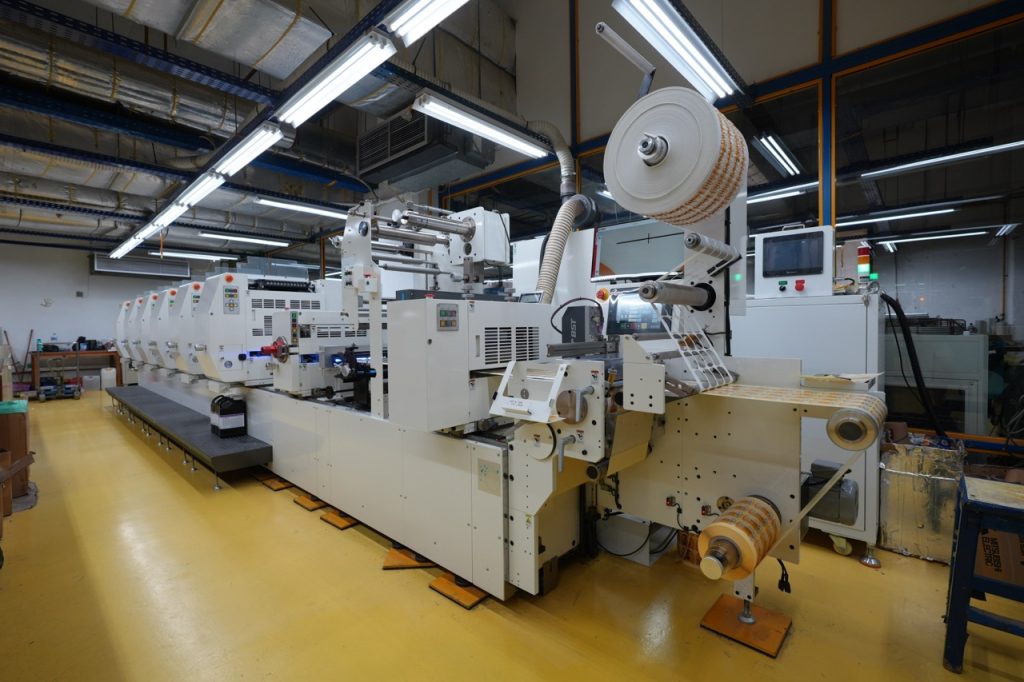
ETALEX has manufactured printed labels in Cairo since 1952. Our food and beverage labels page explains how we choose the label material for the way a pack is stored. This guide sets out the questions to ask any label supplier. It is practical guidance, not legal advice.
What makes food packaging labels different?
Food labels are applied and stored in harder conditions than most. HERMA, a label materials maker, notes that food labelling often happens on moist and cold surfaces, on products that are already frozen or hot filled and then cooled, and sometimes on greasy packaging. The label also carries information the law requires, so it must stay on and readable.
That gives a food label three jobs at once:
- Stay attached through filling, chilling or freezing, transport and the shelf.
- Stay legible, so dates, ingredients and allergens remain readable.
- Stay compatible with the food, which raises questions about adhesives, inks and varnishes.
Heat, moisture and cold all affect how a label performs and how long it lasts, which is why the label material is defined by the storage conditions (ETALEX food and beverage page).
Which storage conditions should decide the label material?
Decide the material from the coldest, wettest and greasiest moment in the pack’s life, not from the filling room on a good day. Note where the pack is filled, whether it is chilled, frozen, hot filled or kept humid, and what the surface is made of. These facts drive the choice of facestock, adhesive and protective finish.
Use the table to prepare questions for your label manufacturer; it is not a specification.
| Condition | What can go wrong | Questions to ask your label printer |
|---|---|---|
| Chilled packs with condensation | Adhesive loses grip on a cold, damp surface; label slides or lifts | Is the adhesive designed for application on cool and moist surfaces? What is its minimum application temperature? |
| Frozen goods, or labelled before freezing | Tack drops at low temperature; label falls off frosted surfaces | Is the construction intended for application at the temperature of our line, and for the storage temperature afterwards? |
| Hot filled then cooled | Temperature change during the label’s first hours | Does the adhesive’s service temperature range cover both ends of our process? |
| Greasy or fatty foods | Adhesion problems; fat-soluble components migrating | Is the adhesive approved for fatty food contact, if contact is possible? |
| Humid or wet storage | Paper labels are not waterproof | Is a film facestock, such as polypropylene, needed? |
| Thin film packaging | Weak barrier between label and food | Are the adhesive, inks and varnish low migration? What documents support that? |
| Low-energy plastics (PP, HDPE, LDPE) | Labels remove more easily than from glass or PET | Has this adhesive been tested on our container material? |
Sources: HERMA; Avery Dennison adhesive guide and facestock guide; ETALEX cosmetics page (see Sources).
How do moisture, cold and grease affect label adhesion?
Cold makes adhesives firmer and less tacky, water on the surface stops a label making contact, and grease interferes with the bond. Avery Dennison’s adhesive guide says most of its adhesives are designed for ambient conditions, with a minimum application temperature of +5°C, and that application and service temperatures both need to be considered.
Every adhesive has its own optimum application temperature window, the guide adds, so an adhesive that works in an ambient trial may behave differently on a chilled line.
HERMA describes the frozen case directly: “Most labels simply fall off of surfaces that are icy or made damp by condensation”, and a strong initial tack is essential. Avery Dennison’s facestock guide adds that surface conditions such as greasy, dry or hot do not change the facestock choice, but they directly affect the adhesive.
Our guide to self-adhesive label materials explains facestock, adhesive and liner in more depth.
What should you ask about food contact and migration?
Ask whether the label could touch the food, directly or through thin packaging, and which components are suitable for that use. In the EU, Regulation (EC) No 1935/2004 covers materials intended to come into contact with food “directly or indirectly”, and requires that they do not transfer their constituents to food in quantities that could endanger health.
The regulation also covers materials that can “reasonably be expected” to come into contact with food or transfer constituents to it under normal or foreseeable conditions of use. Whether a given label falls in scope depends on the pack and market; confirm this with your own quality team.
Practical questions to ask your label printer:
- Will the label touch food? Tell the printer whether the label goes on glass, a rigid tub, thin film or directly on the product.
- Which components are intended for food use? HERMA states that low-migration adhesives, label materials, printing inks and varnishes are essential for safe labelling of food, particularly where film packaging lacks a sufficient barrier.
- Is the adhesive approved for fatty foods? Avery Dennison’s adhesive guide lists “direct food contact” and “fatty food contact” as separate approvals, and not every adhesive carries them.
- What documents support the answer? Where EU specific measures apply, materials must be accompanied by a written declaration of compliance (Article 16 of Regulation 1935/2004).
- Is the material traceable? The same regulation requires traceability of materials at all stages (Article 17).
A supplier’s management-system certificates are a separate question from material suitability. ETALEX holds HACCP and ISO 9001 certificates issued by ABS Global, valid until 16 May 2027; you can open them on our ISO 9001, GMP and HACCP certificates page. Food-contact suitability still depends on the material, adhesive and ink of each label, so tell us whether the label will touch food.
Which food labelling rules affect the label itself?
Food information rules mostly govern what the label says, but some affect how it is made. The Codex general labelling standard says labels on prepackaged foods “shall be applied in such a manner that they will not become separated from the container”, and required statements must be “clear, prominent, indelible and readily legible”.
The EU food information regulation, Regulation (EU) No 1169/2011, sets similar expectations for food sold in the EU:
- Visible and durable. Mandatory information must be “easily visible, clearly legible and, where appropriate, indelible” (Article 13(1)).
- Minimum text size. Mandatory particulars use an x-height of at least 1.2 mm, or 0.9 mm where the largest surface of the pack is under 80 cm² (Article 13(2) and 13(3)).
- Same field of vision. The name of the food and the net quantity (and alcoholic strength for drinks above 1.2% by volume) appear together (Article 13(5)).
- What must appear. Article 9 lists the mandatory particulars, including ingredients, allergens, net quantity, date marking and any special storage conditions.
These texts are examples; rules differ by market and change over time, so check the current version with your regulatory adviser. For each label, ask: will the text survive moisture, abrasion and cold?
What should you send your label manufacturer?
Send a description of the pack, its surface and every condition it meets from filling to the consumer, together with the label size, quantity and artwork. The more precisely you describe moisture, temperature and contact with food, the better your printer can propose a construction for you to test.
- Container or pack type and material (glass, PET, PP, HDPE, film, carton).
- Filling and labelling conditions: temperature of the pack and the room, and any condensation.
- Storage and distribution: frozen, chilled, ambient or humid, and for how long.
- Whether the label could touch the food, and whether the food is fatty or moist.
- Label size, shape, quantity and number of versions.
- Finish and protection required, and the markets where the product will be sold.
- Any documents your quality team needs from the label supplier.
Our self-adhesive labels page shows the label types we supply. Our label quote checklist covers the full specification, and how to choose a label manufacturer explains what to ask suppliers. For drinks, see our planned guide to beverage and water bottle labels.
Frequently asked questions
What is the best label material for food packaging? There is no single best material. The right construction depends on the pack surface, how it is filled and stored, and whether the label could touch the food. Paper suits packs kept dry, while polypropylene film is waterproof. The adhesive matters as much as the facestock, so test the full construction on real packs in real storage conditions.
Why do labels fall off chilled or frozen food packs? Cold makes many adhesives firmer and less tacky, and condensation or frost stops the label making full contact. HERMA notes that most labels simply fall off icy or damp surfaces. Ask for an adhesive intended for your application temperature, and check its minimum application temperature and service temperature range.
Do food labels need to be food safe? It depends on whether the label can come into contact with food, directly or through thin packaging. EU Regulation 1935/2004 covers materials in direct or indirect contact. Ask your printer which adhesives, inks and varnishes suit food use, request supporting documents, and confirm the position with your own quality or regulatory team.
Is a HACCP certificate the same as food-contact approval? No. A HACCP certificate relates to a supplier’s food safety management system and the scope written on the certificate. Food-contact suitability concerns the specific label materials, adhesives and inks. Ask for both: the certificate, with its scope and validity, and documentation for the materials used on your label.
Sources
- ETALEX, Food and Beverage page. https://www.etalex.com/food-beverage/. Accessed 5 October 2026. Used for: Cairo since 1952; material chosen for storage conditions; heat, moisture and cold affect label performance; quality testing from frozen food to humid storage; food-contact suitability depends on material, adhesive and ink.
- ETALEX, Certifications and Awards page. https://www.etalex.com/awards/. Accessed 5 October 2026. Used for: HACCP and ISO 9001:2015 certificates issued by ABS Global, valid until 16 May 2027.
- Regulation (EU) No 1169/2011 on the provision of food information to consumers, EUR-Lex. https://eur-lex.europa.eu/legal-content/EN/TXT/HTML/?uri=CELEX:32011R1169. Accessed 5 October 2026. Used for: Article 9 mandatory particulars; Article 13(1) easily visible, clearly legible and, where appropriate, indelible; Article 13(2) and (3) x-height 1.2 mm and 0.9 mm under 80 cm²; Article 13(5) same field of vision. Text as originally published; check the consolidated version before relying on it.
- Codex Alimentarius, General Standard for the Labelling of Prepackaged Foods (CXS 1-1985), FAO/WHO (PDF). https://www.fao.org/input/download/standards/32/CXS_001e.pdf. Accessed 5 October 2026. Used for: clause 8.1.1 labels not to become separated from the container; clause 8.1.2 statements clear, prominent, indelible and readily legible. The copy opened lists amendments to 2010; check FAO for the latest revision.
- Regulation (EC) No 1935/2004 on materials and articles intended to come into contact with food, EUR-Lex. https://eur-lex.europa.eu/legal-content/EN/TXT/HTML/?uri=CELEX:32004R1935. Accessed 5 October 2026. Used for: Article 1 scope (direct or indirect contact; reasonably expected contact or transfer); Article 3 general requirements; Article 16 declaration of compliance; Article 17 traceability.
- HERMA, “Labels for food labelling – for a wide range of conditions”. https://www.herma.com/label/products/labelling-of-food-and-deep-frozen-products/. Accessed 5 October 2026. Used for: moist and cold surfaces, frozen, hot filled and greasy packs; low-migration adhesives, materials, inks and varnishes essential, particularly with film packaging lacking a barrier.
- HERMA, “Deep-freeze labels: secure labelling of frozen products”. https://www.herma.com/label/solutions/foods-and-beverages/deep-freeze-labels-food-trading-sector/. Accessed 5 October 2026. Used for: most labels fall off icy or condensation-damp surfaces; strong initial tack essential; migration of fat-soluble components with greasy foods.
- Avery Dennison, “Adhesive Technologies: Labels + Packaging Technical Guide, Europe 2020” (PDF). https://label.averydennison.com/content/dam/averydennison/lpm-responsive/europe/english/documents/product-overviews/product/adhesives/lpm-eu-technical%20guide-adhesive%20technologies-2020-web.pdf. Accessed 5 October 2026. Used for: minimum application temperature of +5°C for most ambient adhesives; application and service temperature both matter; adhesive-specific temperature windows; direct food and fatty food contact listed as separate approvals.
- Avery Dennison (Ophelia Gallagher), “How to Choose the Right Film Facestock” (whitepaper, PDF). https://www.averydennison.com/content/dam/averydennison/lpm/ap/en_cn/doc/resourcecenter/HowtoChoosetheRightFilmFacestock.pdf. Accessed 5 October 2026. Used for: PET, glass and metals as high-energy substrates and HDPE, PP and LDPE as low-energy substrates; greasy, dry or hot surfaces affect adhesive rather than facestock choice.
- ETALEX, Cosmetics page. https://www.etalex.com/cosmetics/. Accessed 5 October 2026. Used for: polypropylene labels waterproof and oil resistant; paper labels not waterproof and suited to packs kept dry.
Written by
Etalex Team
Content & Editorial Team
Practical guidance on label printing, finishing, materials and packaging, informed by Etalex's manufacturing experience in Cairo since 1952.
Related guides
Industry Insights
Motor Oil and Lubricant Labels: Oil Resistance and Adhesion on Plastic Containers
Key answer Motor oil labels fail mainly at the edges: plastic oil containers are hard surfaces for adhesives to grip, and oil on the pack…
Industry Insights
Chemical and Detergent Labels: Resistance to Moisture, Chemicals and Handling
Key answer A chemical or detergent label has to stay attached and readable while the product drips on it, the pack is handled wet and…
Industry Insights
Beverage and Water Bottle Labels: Wet Conditions, Condensation and Adhesion
Key answer Labels fail on beverage bottles mainly because cold bottles collect condensation, and a self-adhesive label will not stick to water. Keep the bottle…
Talk to the Etalex team
Ready to discuss your labels?
Send the size, quantity, material, finish and container, with artwork if you have it. Our team in Cairo replies during working hours, Sunday to Thursday.