Label Printing Methods Compared: Flexo, Rotary Offset, Letterpress, Silk Screen and Digital
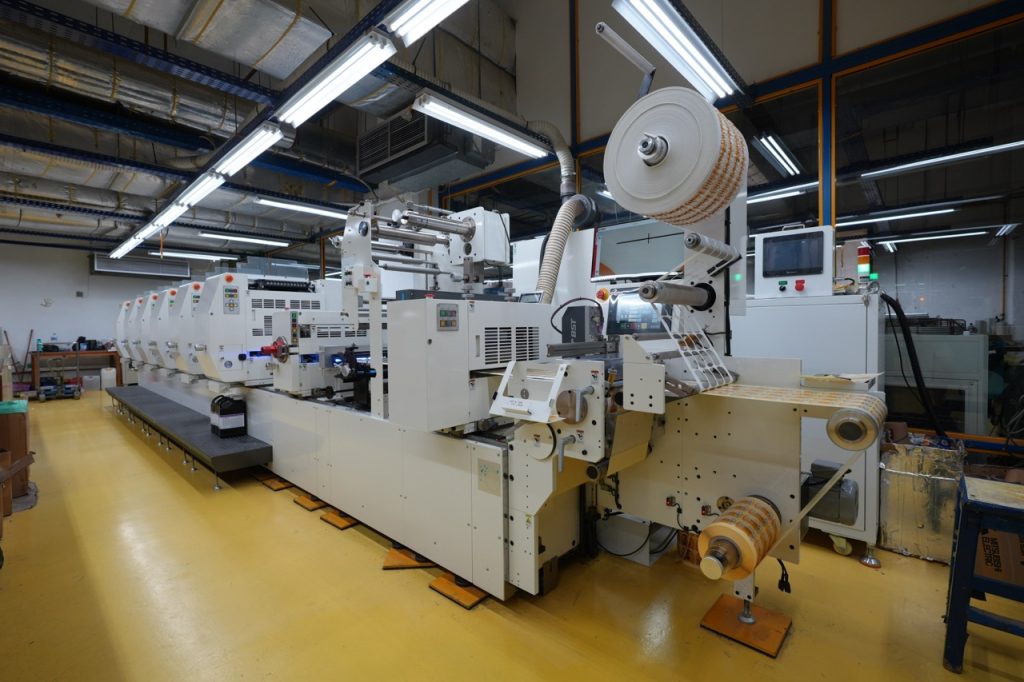
The right method depends on five things: how many labels you need, how many versions, how fine the artwork is, which colours and effects you want, and what material the label is printed on. This guide compares the five processes on the same attributes, then gives a checklist you can use before you ask for a quote.
ETALEX has manufactured printed labels and tags in Cairo since 1952. Letterpress, rotary offset, flexography, silk screen, digital printing and hot stamping are all listed as in-house processes, so this comparison covers processes run under one roof. For how we apply them, see our label printing technologies page.
What are the main label printing methods?
The five main label printing methods are flexography, rotary offset, letterpress, silk screen and digital. The first three print from a plate; silk screen pushes ink through a mesh; digital prints straight from a file without plates. Each balances set-up cost, detail, ink film and speed differently, which is why label converters often combine them on one job.
Short definitions:
- Flexography (flexo) is a relief printing process that transfers fluid ink from flexible photopolymer plates, metered by an engraved anilox roller, onto the label web. It is widely used for roll labels and works on papers, films and foils.
- Rotary offset is a lithographic process in which ink is transferred from a flat plate to a rubber blanket and then to the label. It is known for fine detail and smooth tonal gradation.
- Letterpress is a relief process that prints paste ink from raised plates pressed against the label. On label presses it runs fully rotary or semi-rotary (intermittent), and it suits text, spot colours and short to medium runs.
- Silk screen (screen printing) is a stencil process that pushes ink through a fine mesh. It deposits a much thicker ink layer than other methods, for opaque whites, bright colours and raised, tactile effects.
- Digital printing is a plateless process, by inkjet or toner (electrophotography), that prints each label directly from a digital file. It suits short runs, many versions and variable data such as serial numbers.
Sources: Prepressure.com; Esko; ORTHOTEC (see Sources).
How do the five methods compare?
Plate-based methods (flexo, offset, letterpress) carry set-up costs that make them more economical as runs lengthen. Digital has almost no set-up, so it wins on short runs and versions. Silk screen is usually added for an effect rather than used alone. The table compares all five on the same attributes; exact limits depend on the press and material.
| Attribute | Flexo | Rotary offset | Letterpress | Silk screen | Digital |
|---|---|---|---|---|---|
| Typical run length | Medium to long | Medium to long | Short to medium | Short to long, usually as one station of a combined job | Very short to medium; many versions |
| Image quality and detail | Good to very good; modern plates have narrowed the gap with offset | Very fine detail, fine text and smooth vignettes | Crisp text and solids; less suited to fine halftones | Coarser detail; strongest on solids, text and effects | Good to very good; depends on press resolution |
| Colour | Process and spot colours; strong, consistent solids | Process colour with smooth tones; thinner ink film, so opaque whites may need another process | Spot and process colours with paste inks | Highly opaque whites, bright and special inks | Process colours, sometimes extended gamut or white, depending on the press |
| Set-up and tooling | Plate per colour, anilox selection, make-ready | Plate per colour, make-ready; plates are generally quick to produce | Plate per colour; make-ready | Screen per colour; make-ready | No plates; file preparation and colour profiling |
| Typical uses | Food, beverage, household, chemical and industrial labels on paper and film | Cosmetics, premium food and drink, pharma labels with fine text | Short runs with spot colours, often combined with foil and emboss | White on clear film, tactile varnish, bright accents, raised effects | Prototypes, launches, seasonal and multi-version runs, variable data |
| Limits | Plate cost and make-ready make very short runs less economical | Thin ink film; usually needs smooth stocks | Slower than flexo; less widely used than flexo today | Slower; coarse halftones | Higher cost per label on long runs; substrate and ink options depend on the press |
Sources: Esko; Prepressure.com; ORTHOTEC (see Sources).
What is flexographic printing best for?
Flexo is best for medium and long runs of roll labels on a wide range of materials, including papers, films and foils. It prints strong, consistent solids and spot colours at high speed and can be combined inline with varnishing, foiling and die-cutting. The trade-off is plate cost and make-ready, which weigh more on short runs.
Flexo’s flexibility on materials is its main advantage for packaging (Esko). Fluid inks, including UV-curable inks, dry quickly and bond to non-absorbent films, which matters for wet, cold or chemical conditions. Quality depends on the plate, the anilox and the operator; modern high-definition plates hold far finer detail than older flexo work.
When is rotary offset the better choice?
Choose rotary offset when the artwork has very fine text, small type in several languages, photographic images or soft vignettes, and the run is long enough to absorb plate and make-ready costs. Offset is strongest on smooth papers and films. Flexo is often the better fit for rougher stocks, strong solids or very opaque colours.
This is the core of the flexo vs offset question. Offset is an indirect process: the image passes from plate to blanket to label, which helps it reproduce fine screens. It lays a thinner ink film than flexo, so bright solids and opaque whites are often added with flexo or silk screen on the same job. Modern flexo has narrowed the quality gap on many jobs, so the choice is often decided by the stock, the colours and what the converter runs best (Esko).
Is letterpress still used for labels?
Yes. Letterpress is still used for labels, and label presses are still built for it, including semi-rotary (intermittent) models that can carry foil, embossing and die-cutting units (ORTHOTEC). It suits short to medium runs with spot colours and text. Across printing as a whole, flexo is one of the main industrial processes, while letterpress is now a more specialised one (Prepressure.com).
Letterpress prints paste inks from relief plates, giving crisp type and dense solids. Its limits are speed and fine halftones. ETALEX lists letterpress among its processes, and its About page describes it as “letterpress in flat and rotary”.
What does silk screen add to a label?
Silk screen adds a heavy ink deposit that other processes cannot match. It is used for opaque whites, especially on clear film, bright or special inks, and raised, tactile varnishes. On labels it is usually one station alongside flexo, offset or letterpress rather than the only process, because it is slower and holds less fine detail.
Typical reasons to add screen: a no-label look on clear film that still needs a solid white backing, a tactile logo or texture, glitter or special-effect inks, and strong colour on dark materials. Because the ink layer is thick, fine text and small halftones are better printed by another process on the same label.
When does digital printing make sense?
Digital makes sense when quantities are small, artwork changes often, or each label carries different data. With no plates, a new version costs file preparation rather than new tooling, so launches, trials, seasonal designs and many-SKU ranges suit it. On long runs, plate-based methods usually become more economical per label.
Digital presses use inkjet or toner. The colours, whites, resolution and approved materials depend on the specific press, so check that the stock you want is supported and how the ink resists rubbing, moisture or chemicals (Prepressure.com; Esko). Digital output can be varnished, laminated, foiled or die-cut inline or as a separate step.
Can one label use more than one method?
Yes. Many label presses are combination presses that run two or more processes in one pass, for example flexo with screen and foil stations, or offset with flexo varnish. Combining lets each process do what it does best: fine images from offset, solids from flexo, a tactile white from screen, a metallic from foil.
The trade-off is set-up: each extra station adds tooling, make-ready and waste. Ask the manufacturer which elements truly need a second process. Metallic effects are a common addition; our guide to hot stamping vs cold foil covers that choice.
Decision checklist: which method fits your job?
Work through these questions before requesting a quote. Your answers point to a likely process, and a manufacturer can confirm or adjust it once they see the artwork and material. Where more than one answer applies, a combination of methods is often the practical result.
- Quantity per version. Small quantities or one-off trials lean to digital. Large, repeated runs lean to flexo or offset.
- Number of versions. Many designs, languages or SKUs in small quantities favour digital; a few designs in volume favour plates.
- Variable data. Serial numbers, batch codes or personalised content point to digital printing or a digital unit.
- Fine detail. Very small text, fine screens or photographs favour offset or high-definition flexo.
- Solids and spot colours. Brand-critical solid colours favour flexo or letterpress with spot inks.
- Opacity and texture. White on clear film, tactile or raised effects point to silk screen.
- Material. Films and non-absorbent stocks often favour flexo or suitable digital presses; smooth papers suit offset well.
- Conditions of use. Moisture, cold, oils or chemicals require compatible inks, varnish or lamination, whatever the process.
- Colour consistency across reorders. Agree a colour standard and proof approach.
- Finishing. Foil, embossing or varnish may decide which press the job runs on.
Regulated sectors add their own checks. For medicines, see pharmaceutical label printing; for quality systems, see the Etalex certificates: ISO 9001:2015, ISO 14001:2015, ISO 45001:2018, GMP and HACCP.
Frequently asked questions
What is the difference between flexo and offset printing? Flexo prints directly from flexible relief plates with fluid inks and works on a wide range of papers and films. Offset transfers ink from a flat plate to a blanket and then to the label, giving very fine detail and smooth tones on smooth stocks. Flexo usually lays stronger solids; offset excels at fine screens.
Which printing method is best for short runs? Digital printing is usually the first choice for short runs and many versions, because it needs no plates. Letterpress can also suit some short runs with spot colours and embellishment, depending on the presses a converter runs. Where the boundary sits depends on the presses, the number of colours and the finishing, so ask for quotes for both routes when unsure.
Is digital label printing as good as flexo? For many labels the visible quality is comparable, and digital handles fine images and variable data well. Differences show in very long runs, special colours, opaque whites and some materials, where flexo or another process may perform better. Quality depends on the specific press, so ask for a proof on your actual material.
Can a label combine several printing methods? Yes. Combination presses run two or more processes in one pass, such as flexo with silk screen and foil. Each process prints the element it handles best. Every added station increases set-up, tooling and waste, so combine methods only where the effect justifies it, and ask the manufacturer which elements genuinely need a second process.
Sources
- Esko, “Flexo vs. other printing methods: how do they compare?”. https://www.esko.com/en/blog/flexo-vs-other-printing-methods-how-do-they-compare. Accessed 4 October 2026. Used for: flexo vs digital run-length economics and substrate range; offset’s fine-detail reputation and modern flexo narrowing the gap; screen used alongside flexo for tactile effects and opacity.
- Prepressure.com, “Printing processes”. https://www.prepressure.com/printing/processes. Accessed 4 October 2026. Used for: how flexo, offset, letterpress, screen and digital (inkjet and xerography) work; flexo’s use in packaging and labels; screen’s range of substrates; letterpress now a specialised rather than a main industrial process.
- ORTHOTEC, “FLX/CSL Series semi-rotary flexo or letterpress label printing press”. https://www.orthotec.com.tw/flx–csl-series-semi-rotary-flexo-or-letterpress-label-printing-press.html. Accessed 4 October 2026. Used for: semi-rotary (intermittent) letterpress label presses in current manufacture, with optional hot or cold stamping, embossing and die-cutting units.
- ETALEX, About page. https://www.etalex.com/about/. Accessed 4 October 2026. Used for: in-house process list and “letterpress in flat and rotary”.
- ETALEX Contact page. https://www.etalex.com/contact/. Accessed 4 October 2026. Used for: phone, mobile, WhatsApp, email and working hours in the closing CTA.
Written by
Etalex Team
Content & Editorial Team
Practical guidance on label printing, finishing, materials and packaging, informed by Etalex's manufacturing experience in Cairo since 1952.
Related guides
Materials & Technology
Self-Adhesive Label Materials: How to Choose Facestock, Adhesive and Liner
Key answer A self-adhesive label has three layers: a facestock that carries the print, a pressure-sensitive adhesive, and a release liner that carries the label…
Talk to the Etalex team
Ready to discuss your labels?
Send the size, quantity, material, finish and container, with artwork if you have it. Our team in Cairo replies during working hours, Sunday to Thursday.