Cosmetic and Perfume Labels: Finishes, Materials and Durability
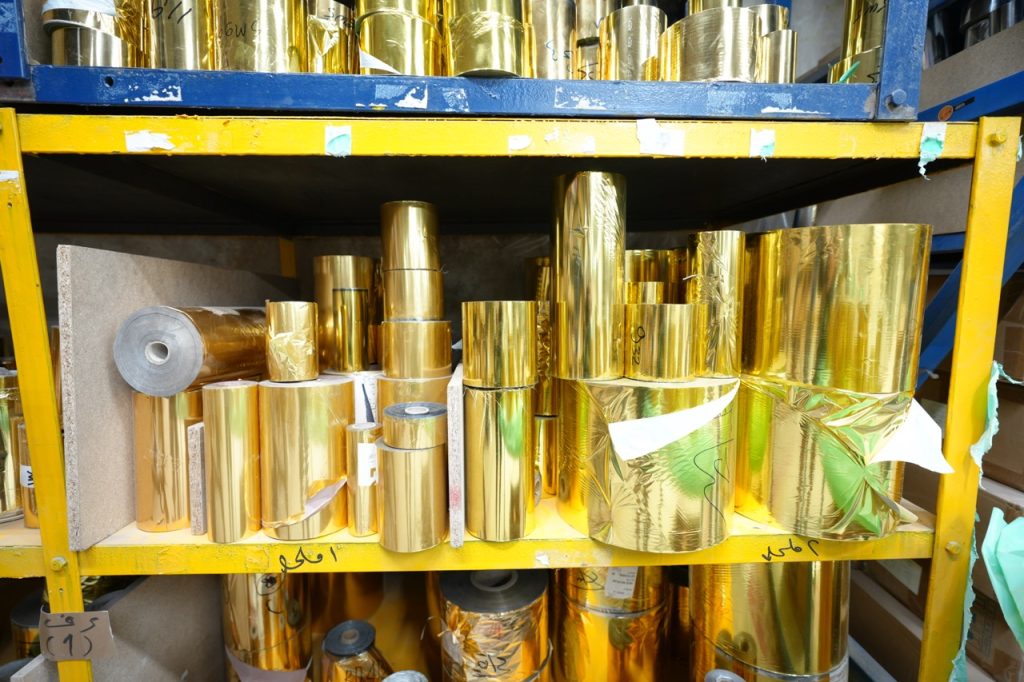
This guide compares the main finishes on the same attributes, explains which materials suit which containers, and covers small cylinders such as lipsticks and eye-liners.
ETALEX has manufactured printed labels and tags in Cairo since 1952. Letterpress (flat and rotary), rotary offset, flexography, silk screen, digital printing and hot stamping are in-house processes, and premium finishing includes embossed labels and multilayer constructions. See how we apply them on our cosmetic labels page.
What makes a cosmetic or perfume label different?
Cosmetic and perfume labels face two demands at once. They sell a premium product, so the finish must look and feel right. They are also handled constantly, carried in bags and stored in humid bathrooms, so the print must resist scratching, water and oils. Small or curved containers add a third demand: the label must stay down.
ETALEX’s own experience with make-up labels is direct: “No label is 100% scratch proof”, but many labels it produces carry “a durable top coat that withstands the handbag, key pocket and fingernail tests”. For bathroom products, a polypropylene (PP) label is “both waterproof and oil resistant”, unlike paper (ETALEX cosmetics page).
Which finishes make a cosmetic label look premium?
The finishes most used on premium cosmetic and perfume labels are gloss or matte varnish, spot varnish, gloss, matte or soft-touch lamination, hot foil, embossing and screen-printed tactile effects. Each changes the look or feel differently, and each has its own durability trade-off. Most premium labels combine two or three, for example matte lamination with foil.
The table is qualitative: actual performance depends on the specific coating, film, foil and press.
| Finish | Look | Feel | Durability considerations | When to use |
|---|---|---|---|---|
| Gloss varnish or UV coating | Shiny, brighter colours | Smooth | Ink makers offer UV varnishes in high-rub and product- or chemical-resistant versions; it remains a thin layer, so confirm resistance on your product | Everyday products where a clean, bright finish and basic protection are enough |
| Matte varnish | Flat, low glare, understated | Smooth to slightly dry | Same thin-layer trade-off as gloss varnish | Natural or minimal brand styles on paper or film |
| Spot varnish | Gloss or matte contrast on selected areas only | Slight change where applied | Protects only where applied unless combined with a flood coat | Highlighting a logo, pattern or product name |
| Gloss lamination (overlaminate) | High shine, clear | Smooth | A clear film over the print; adds thickness and body and resists scuffing, oils and chemicals | Products handled often or used in wet conditions |
| Matte or soft-touch lamination | Non-glare, high-end; soft-touch adds a velvety surface | Matte, or soft and velvety | Film protection as above; check that the extra thickness suits small or curved containers | Premium skincare, make-up and fragrance |
| Hot foil | Metallic, holographic, matte or pigmented colour effects | Smooth, sometimes slightly recessed | Foil transferred by heat and pressure; suppliers make foils for cosmetics durability tests. Confirm rub resistance with your converter | Brand names, borders and accents on perfume and premium cosmetics |
| Embossing (blind or registered) | Raised relief that catches light | Tactile | Relief creates small air pockets under the label; keep a flat border at the edges, especially for humid use | Logos, crests and textures you want customers to feel |
| Screen-printed tactile or opaque ink | Raised or dense, opaque colour | Raised, textured | Thick ink layer; less suited to very fine detail | Tactile logos, opaque white on clear film |
Sources: KURZ; Avery Dennison; Esko; Flint Group; Sun Chemical (see Sources).
How do varnish and lamination protect a cosmetic label?
Both are clear layers over the print. A varnish or UV coating is printed or coated on and cured; it adds gloss or matte and some rub resistance. A lamination (overlaminate) is a clear film applied with adhesive over the label, adding thickness and body, and generally stronger protection against scuffing, oils and chemicals.
Avery Dennison describes overlaminates as clear films that protect the print and can add gloss, matte or soft-feel finishes, with more thickness and body than varnishes. It lists matte films for “cosmetic labels where attractive, high-end appearance is desired”. Ink makers supply UV varnishes for label presses in gloss, matte and tactile versions, including high-rub and product-resistant grades (Flint Group), and some label varnishes are marketed for personal care with resistance to bottle-to-bottle scuffing (Sun Chemical).
The choice comes down to handling. A lipstick carried in a handbag needs a more durable top coat than a bottle that stays on a shelf, so ask your converter which construction it has tested against the wear your product will see.
When should you use hot foil or embossing on a perfume label?
Use hot foil when you want a metallic or special colour effect on a brand name, border or accent. Use embossing when you want customers to feel the design. Hot foil transfers foil to the label with a heated die and pressure; blind embossing raises the label without any foil, creating relief rather than shine.
KURZ, a foil manufacturer, lists cosmetics labels, including self-adhesive labels, among hot stamping’s uses, with effects from glossy metallics to holographic, matte and pigmented colours, and states that its cosmetics decorations are made for the industry’s durability tests. For how heat-applied and adhesive-applied foils differ, read hot stamping vs cold foil.
Embossing can be blind (in an unprinted area) or in register with print. Because relief leaves small air pockets under the label, Avery Dennison advises keeping at least 5 mm without relief at the edge, so edges do not lift in humid conditions. Foil and embossing can appear on the same label design. Read more about embossed labels.
Which label materials suit cosmetic and perfume packaging?
Paper gives texture and a natural look but needs protection from water and oils. Polypropylene (PP) film is waterproof and oil resistant, which suits bathroom products. Clear films give a “no-label” look on glass. Squeezable tubes and bottles need conformable films that flex with the container rather than rigid ones.
Avery Dennison’s film facestock guide explains the trade-off. Biaxially oriented polypropylene (BOPP) is rigid, dispenses well and is often chosen for high clarity, but conforms poorly; polyethylene (PE) is the most conformable and suits curved containers; machine-direction oriented (MDO) films combine conformability with good dispensing. Tubes are “always” labelled with a conformable film, and on glass a conformable film can give high clarity without trapped air bubbles.
Our guide to self-adhesive label materials covers facestock, adhesive and liner in depth, and self-adhesive labels shows what we print.
How do you stop labels lifting on lipsticks and small cylinders?
Labels lift, or “flag”, on tight cylinders because the material wants to spring back flat. The fixes are a more flexible label construction, an adhesive designed for tight curves and, where the design allows, a wrap-around label whose ends overlap so the label sticks to itself as well as to the container.
ETALEX’s approach for lipsticks and eye-liners is a material with a lighter face coat and overlapping edges, both of which help prevent flagging. UPM Raflatac, a label materials supplier, makes the same point: the whole label construction works together, small diameters may need thin papers or very conformable films, and overlapping lets the label hold to itself. It calls the idea that simply changing the adhesive will solve edge lift “a common misconception”.
Stiffness rises with thickness (Avery Dennison), so trial a heavy laminate or deep embossing on a very small diameter before approving the run. Our planned guide to labels for small bottles covers dimensions and application.
What should you specify when you request a cosmetic label quote?
Send the container (material, shape and diameter), label size, quantity per design, number of designs, facestock preference, the finishes you want, and how the product is used and stored. Include artwork if you have it. With this information a converter can recommend a finish and material combination and say what to test.
Use this checklist:
- Container. Glass, rigid plastic or squeezable tube; diameter for small cylinders.
- Look. Gloss, matte or soft-touch; clear or opaque; foil colours and effects.
- Feel. Embossing or tactile screen effects, and where they sit relative to the label edge.
- Conditions. Bathroom humidity, handbag wear, contact with oils, creams or fragrance.
- Quantities and versions. These steer the printing method; see label printing methods compared and our label printing technologies.
- Artwork. Final files or a brief for our graphic design department.
The full list is in our label quote checklist. Approve a proof applied to your real, filled container before a full run.
Frequently asked questions
Which label finish looks most premium on perfume? There is no single answer; it depends on the brand. Metallic hot foil on a brand name, matte or soft-touch lamination for an understated look, and embossing for relief are common choices, often combined. Choose the finish that matches your packaging style, then confirm durability and adhesion on the actual bottle before approving the run.
Will a cosmetic label scratch? Any label can scratch. As ETALEX’s cosmetics page puts it, no label is 100 percent scratch proof. A durable top coat, such as a protective varnish or a laminate film, reduces scuffing from handbags, keys and fingernails. Lamination generally gives more protection than a thin coating. Tell your converter how the product will be carried and used.
Are paper labels suitable for bathroom products? Paper can work for dry storage, but water and oils can damage it. For products kept in a bathroom or handled with wet or oily hands, polypropylene film is a safer choice because it is waterproof and oil resistant. If you prefer a paper look, ask whether a protective laminate makes it suitable for your conditions.
Can foil and embossing be used on the same label? Yes, foil and embossing can be combined in one label design, and suppliers show examples that pair hot foil with embossing and tactile varnish. How the two are produced, in one pass or separate passes, depends on the converter’s equipment. Ask your label manufacturer which method it uses and request a proof before approving.
Sources
- ETALEX, Cosmetics page. https://www.etalex.com/cosmetics/. Accessed 5 October 2026. Used for: durable top coat and handbag, key pocket and fingernail tests; “no label is 100% scratch proof”; lighter face coat and overlapping edges on small cylinders; PP waterproof and oil resistant; graphic design department.
- ETALEX, Home page. https://www.etalex.com/. Accessed 5 October 2026. Used for: embossed labels and multilayer constructions as premium finishing; established 1952; Cairo address.
- ETALEX, About page. https://www.etalex.com/about/. Accessed 5 October 2026. Used for: in-house processes (letterpress, rotary offset, flexography, silk screen, digital printing, hot stamping).
- KURZ Graphics, “What is hot stamping? FAQ”. https://www.kurz-graphics.com/en/hot-stamping/faq-hot-stamping/. Accessed 5 October 2026. Used for: hot stamping by heated die and mechanical pressure; blind embossing is not hot stamping because no foil is transferred.
- KURZ Graphics, “Hot Stamping”. https://www.kurz-graphics.com/en/hot-stamping/. Accessed 5 October 2026. Used for: metallic, diffractive, matte, pigmented and semi-transparent effects; use on cosmetics labels including self-adhesive and wet-adhesive labels; adhesion and durability.
- KURZ, “Surface Decorations for Cosmetic Products”. https://www.kurz-world.com/en/markets/cosmetics/. Accessed 5 October 2026. Used for: decorations designed to meet cosmetics industry durability tests; scratch- and abrasion-resistant variants.
- Avery Dennison, “Overlaminates: Films with Technology. Products with Purpose.” (North America brochure, PDF). https://label.averydennison.com/content/dam/averydennison/lpm-responsive/na/doc/product-overviews/product/overlaminates/br-overlaminates.pdf. Accessed 5 October 2026. Used for: what a self-wound overlaminate is; gloss, matte and soft-feel finishes; added thickness and body versus varnishes; scuff, oil and chemical resistance; matte films for cosmetic labels; health and beauty use.
- Avery Dennison, “Self-Wound Overlaminates”. https://label.averydennison.com/na/en/home/products/overlaminates.html. Accessed 5 October 2026. Used for: overlaminates adding protection, functionality and aesthetics; velvety-feel overlaminate.
- Avery Dennison (Ophelia Gallagher), “How to Choose the Right Film Facestock” (whitepaper, PDF). https://www.averydennison.com/content/dam/averydennison/lpm/ap/en_cn/doc/resourcecenter/HowtoChoosetheRightFilmFacestock.pdf. Accessed 5 October 2026. Used for: stiffness from thickness and modulus; BOPP, PE and MDO trade-offs; conformable films for tubes and squeezable containers; conformable film on glass.
- Avery Dennison M_use, “Technical Guide to Label Embossing”. https://www.my-muse.com/en/home/insights/label-embossing.html. Accessed 5 October 2026. Used for: blind embossing and embossing in register; air pockets under relief; at least 5 mm without relief at the label edge; example combining embossing with hot foil and braille varnish.
- UPM Raflatac, “How to decrease the risk of label edge lifting on small diameter injectables containers”. https://www.upmraflatac.com/articles/raflatac/23/how-to-decrease-the-risk-of-label-edge-lifting-on-small-diameter-injectables-containers/. Accessed 5 October 2026. Used for: whole construction affects edge lift; thin papers and conformable films for small diameters; overlapping so the label sticks to itself; “common misconception” that simply changing the adhesive solves edge lift; readable article confirmed on re-open 5 October 2026.
- Esko, “Flexo vs. other printing methods: how do they compare?”. https://www.esko.com/en/blog/flexo-vs-other-printing-methods-how-do-they-compare. Accessed 5 October 2026. Used for: screen printing used inline for thick or tactile ink deposits and strong opacity.
- Flint Group Narrow Web, “UV Varnishes: high performance products for a wide range of print processes” (product brochure, PDF, version 07-31-2012). https://www.flintgrp.com/media/osdfisx2/uv_varnishes_ver2_us.pdf. Accessed 5 October 2026. Used for: UV varnishes for screen, letterpress and flexo on self-adhesive labels (papers and films); gloss, matte and tactile coatings; hi-rub and product-resistant coatings; high chemical resistance versions; hot foil printable (foil dependent).
- Sun Chemical, “Sun Chemical Announces Innovative Range of Varnish Solutions for Enhancing Resistance of HP Indigo Printed Labels” (4 November 2021). https://www.sunchemical.com/sun-chemical-announces-innovative-range-of-varnish-solutions-for-enhancing-resistance-of-hp-indigo-printed-labels/. Accessed 5 October 2026. Used for: gloss and matte label varnishes with mechanical, chemical, water and thermal resistance withstanding a bottle-to-bottle scuffing test; personal care applications; printed on standard UV coating equipment.
Written by
Etalex Team
Content & Editorial Team
Practical guidance on label printing, finishing, materials and packaging, informed by Etalex's manufacturing experience in Cairo since 1952.
Related guides
Guides
Labels for Small Bottles and Cylinders: Design and Application Tips
Key answer On small bottles and tight cylinders, labels tend to lift at the edges because the material wants to spring back flat. Choose a…
Guides
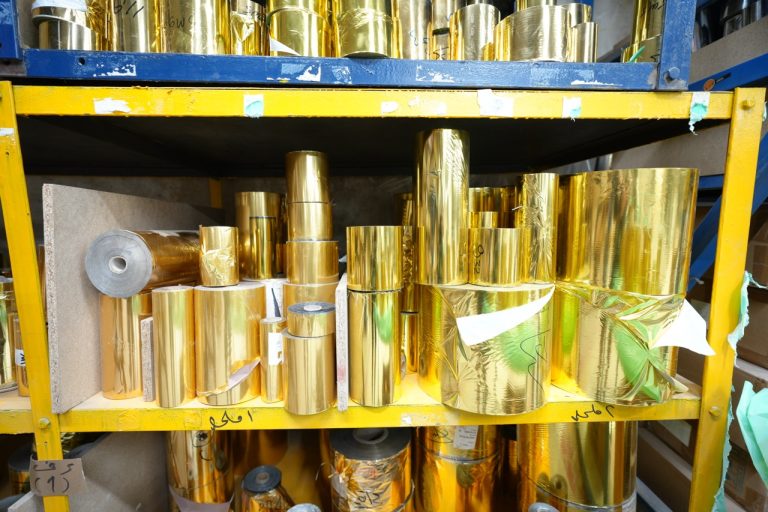
Hot Stamping vs Cold Foil on Labels: Differences, Cost Drivers and When to Use Each
Key answer Hot foil stamping transfers foil to a label with a heated metal die and pressure, in its own station or pass. Cold foil…
Industry Insights
Motor Oil and Lubricant Labels: Oil Resistance and Adhesion on Plastic Containers
Key answer Motor oil labels fail mainly at the edges: plastic oil containers are hard surfaces for adhesives to grip, and oil on the pack…
Talk to the Etalex team
Ready to discuss your labels?
Send the size, quantity, material, finish and container, with artwork if you have it. Our team in Cairo replies during working hours, Sunday to Thursday.