Motor Oil and Lubricant Labels: Oil Resistance and Adhesion on Plastic Containers
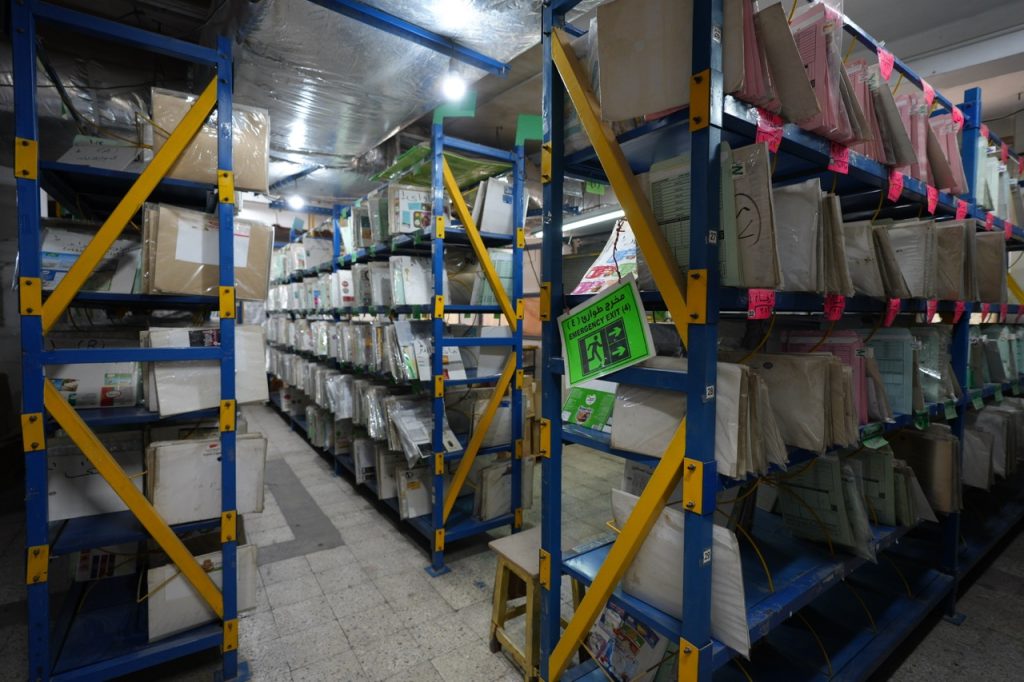
ETALEX has manufactured printed labels in Cairo since 1952. Our motor oil and lubricant labels page explains how we approach this market: lubricant packs are filled warm, stacked in hot stores and handled with oily hands, and the label has to keep its adhesion and stay readable through all of it. This guide sets out what to check and what to ask any label supplier.
Why are motor oil labels harder to get right?
A lubricant label meets three problems at once: a low-energy plastic container, oil on the surface or on the hands that handle it, and a long working life in stores and workshops. No single material choice solves all three.
HERMA, a German label maker, describes labels for the chemical industry as needing to hold on surfaces that are “highly curved, rough, dusty or oily”, and to resist oil, acids, alkalis and solvents depending on the application. Avery Dennison’s facestock guide adds a useful split: whether a surface is greasy, dry or hot does not change the facestock choice, but it “directly” affects the adhesive. The label has to stay attached, resist oil, and keep the grade, safety information and batch code readable in a workshop.
Why do labels lift on HDPE bottles and jerrycans?
If your bottle or jerrycan is made of HDPE or another polyethylene, the label starts on a low surface energy plastic. Avery Dennison’s adhesive guide explains that polar surfaces such as PET and glass have high surface energy and “are easier to stick to”, while apolar surfaces such as PVC and HDPE have low surface energy, “so adhesives don’t stick as easily and are more challenging”. Oil makes this harder. The same adhesive guide ranks application surfaces from easy to “extremely difficult”, and places “dusty and oil contaminated surfaces” in the heavy rough or contaminated group, next to tyres and concrete. It describes hot-melt rubber adhesives as adhering “well on rough or contaminated surfaces”, and solvent hybrid adhesives as the best performers “on challenging, textured or contaminated surfaces”. These are adhesive families, not guarantees: the right one depends on the container, the line and the label construction.
Keep oil off the label panel at application, and give your supplier the exact container material: “plastic bottle” is not a specification.
FINAT, the European self-adhesive label association, publishes a test method for the surface tension of plastic films (FTM 15). Ask whether your label supplier or container supplier can tell you how the container surface has been checked, and whether it changes between production batches.
Why do label edges lift on curved and squeezable containers?
Edge lift, or flagging, happens when a label’s stiffness pulls against the curve of the container harder than the adhesive holds it down. Small bottles, curved shoulders, grips and squeezable walls add that stress, and oil reaching a lifting edge makes it worse.
Avery Dennison’s facestock guide notes that rigid films suit flat or curved containers only if they are not squeezable and the label area is flat, while any container that is squeezable, has a waist or is egg-shaped “requires conformable films”. It describes polyethylene (PE) as “the most conformable film”, often used to label curved containers, and adds that conformable films perform better than rigid films over ridges, bumps and shaped edges.
When edges lift, ask your label supplier whether the label crosses a seam, grip or tight curve it does not need to cover; whether a more conformable film would suit the container; whether the adhesive is intended for low-energy plastics and your line conditions; and whether the container material or supplier has changed since approval.
How do you keep a lubricant label readable?
The label has to stay readable after oil splash, rubbing in cartons and on shelves, and oily handling. Two things protect it: a facestock and adhesive that do not break down when oil reaches them, and a print surface, often finished with a top coat, that resists rubbing.
Rub resistance can be tested. ASTM D5264, a standard practice for the abrasion resistance of printed materials using the Sutherland rub tester, applies to labels and lets buyers and sellers check printed products against agreed durability requirements. For resistance to oil and other fluids, FINAT publishes two chemical resistance test methods: a spot method (FTM 16) and an immersion method (FTM 17).
Ask which tests your supplier can run or arrange, and how results will be judged. Ideally the test fluid is your own product.
What about batch codes, expiry dates and safety information?
If batch codes and dates are printed onto the label at the filling line, after the label has been made, the coding area must accept your coder’s ink or ribbon, and the code must survive the same oil and rubbing as the rest of the label. HERMA notes for its durable seawater-resistant labels that the toner, ink or thermal transfer ribbon must also meet the requirement, not only the label material.
Some lubricants are classified as hazardous, and then hazard labelling rules apply. Under Article 31 of the CLP Regulation (EC) No 1272/2008, labels “shall be firmly affixed” to the packaging, and the label elements “shall be clearly and indelibly marked” and “stand out clearly from the background”. Check each product’s classification and each market’s rules with your regulatory adviser; this guide is not legal advice.
Engine oils licensed under the American Petroleum Institute’s programme also carry API marks, and API checks that they “are properly displayed on containers” under the rules in API 1509. If your oils carry these marks, include them in your label brief.
How should you test motor oil labels before a full run?
Test the complete label on your real containers, applied on your real line, then put the packs through the conditions they will meet. Avery Dennison’s adhesive guide recommends “testing a complete label construction for your specific application upfront”, and notes that its own adhesive ratings were measured on an HDPE surface using FINAT’s loop tack method (FTM 9) and are directional only.
FINAT test methods give you a shared language: FTM 1 and 2 cover peel adhesion, FTM 9 loop tack (initial grab) and FTM 8 resistance to shear. Use the table to plan your trial.
| Condition | What can go wrong | What to check or request |
|---|---|---|
| Low-energy container (HDPE) | Weak grip; label peels easily | Trial on the exact container material; ask how the adhesive was chosen and tested (peel, FTM 1 or 2; tack, FTM 9) |
| Oil on the container at labelling | Label slides or never fully bonds | Clean label panel at application; adhesive intended for contaminated surfaces |
| Curved or squeezable container | Edges lift (flagging) | Conformable facestock; label shape and position; check edges after storage, not only at the line |
| Oil or fuel splash on the label | Facestock or adhesive softens; print smears | Chemical resistance test with your own product (FTM 16 spot or FTM 17 immersion) |
| Rubbing in cartons and handling | Scuffed print; unreadable text | Rub test on printed labels (ASTM D5264) with and without a top coat |
| Batch and date coding at the line | Code smears or rubs off | Coding trial with your own coder and ink or ribbon, then rub and oil tests |
| Hot stores and long storage | Adhesion weakens over time | Recheck labelled packs after storage in realistic conditions |
Sources: Avery Dennison adhesive guide and facestock guide; FINAT test methods; ASTM D5264; HERMA (see Sources).
Our guide to self-adhesive label materials explains facestock, adhesive and liner in more depth, and our label printing methods guide compares the processes used to print them.
What should you tell your label manufacturer?
Describe the container, the filling line and every condition the labelled pack meets, from filling to the workshop. These facts decide the facestock, adhesive and top coat.
- Container type, material and shape (bottle, jerrycan or other), and the label position.
- Fill temperature, and whether the pack is labelled before or after filling.
- Whether oil can reach the label area during filling or capping.
- How packs are stored before sale, including hot stores.
- How the pack is used: workshop, retail shelf or industrial site.
- Batch and date coding: method, position and the coder used.
- Any hazard labelling or certification marks the label must carry.
- Label size, quantity, number of versions and finish.
Then ask which tests the supplier will run or recommend, on which containers, and how results will be reported. Our label quote checklist covers the full specification, and our guide on how to choose a label manufacturer lists the checks to run on any supplier. See also our self-adhesive labels and printing technologies pages, or all the industries we serve, including detergent and cleaning product labels.
Frequently asked questions
Why do labels peel off motor oil bottles? If the bottle or jerrycan is HDPE, it is a low surface energy plastic that adhesives grip less easily than glass or PET. Oil weakens the bond further, and stiff labels lift at the edges of curved or squeezable walls. Specify the label for your exact container and test labelled packs.
What makes a label oil resistant? The whole construction matters: a facestock and adhesive that do not break down when oil reaches them, and a print surface, often with a top coat, that resists smearing and rubbing. Ask your supplier to test the printed label with your own product, for example using FINAT’s chemical resistance spot or immersion method.
Which tests should I ask for on lubricant labels? Ask for adhesion on your actual container (peel and tack, FINAT FTM 1, 2 and 9), resistance to your oil (FINAT FTM 16 or 17) and rub resistance of the printed label (ASTM D5264). Recheck labelled packs after realistic storage, not only at the line.
How do I keep batch codes readable on oil containers? Trial your own coder, ink or ribbon on the actual label stock before approving it, then put the coded labels through the same rub and oil tests as the rest of the label.
Sources
- ETALEX, Automotive Oils and Lubricants page. https://www.etalex.com/automotive-lubricants/. Accessed 6 October 2026. Used for: Cairo since 1952; packs filled warm, stacked in hot stores and handled with oily hands; label must keep adhesion and stay readable; face stock, adhesive and top coat specified for each pack.
- Avery Dennison, “Adhesive Technologies: Labels + Packaging Technical Guide, Europe 2020” (PDF). https://label.averydennison.com/content/dam/averydennison/lpm-responsive/europe/english/documents/product-overviews/product/adhesives/lpm-eu-technical%20guide-adhesive%20technologies-2020-web.pdf. Accessed 6 October 2026. Used for: PET and glass high surface energy, PVC and HDPE low surface energy and harder to stick to; dusty and oil contaminated surfaces in the heavy rough or contaminated group; hot-melt rubber adheres well on rough or contaminated surfaces; solvent hybrids best on challenging, textured or contaminated surfaces; ratings measured on HDPE to FTM 9 and directional only; recommendation to test a complete label construction upfront.
- Avery Dennison (Ophelia Gallagher), “How to Choose the Right Film Facestock” (whitepaper, PDF). https://www.averydennison.com/content/dam/averydennison/lpm/ap/en_cn/doc/resourcecenter/HowtoChoosetheRightFilmFacestock.pdf. Accessed 6 October 2026. Used for: greasy, dry or hot surfaces affect adhesive not facestock choice; squeezable, waisted or egg-shaped containers need conformable films; PE the most conformable film; conformable films better over ridges, bumps and shaped edges.
- FINAT, “FINAT Test Methods”. https://www.finat.com/knowledge/finat-test-methods. Accessed 6 October 2026. Used for: names and numbers of FTM 1 and 2 (peel adhesion), FTM 8 (resistance to shear), FTM 9 (loop tack), FTM 15 (surface tension of plastic films), FTM 16 (chemical resistance, spot method), FTM 17 (chemical resistance, immersion method).
- ASTM International, D5264-98(2019), “Standard Practice for Abrasion Resistance of Printed Materials by the Sutherland Rub Tester”. https://store.astm.org/d5264-98r19.html. Accessed 6 October 2026. Used for: scope covering labels; abrasion in shipment, storage and handling; lets buyers and sellers check printed products against agreed durability requirements.
- HERMA, “Chemical labels for every need of chemical industry products”. https://www.herma.com/label/industries/chemicals-industry/. Accessed 6 October 2026. Used for: labels holding on highly curved, rough, dusty or oily surfaces; resistance to oil, acids, alkalis and solvents depending on the application.
- HERMA, “Seawater resistant labels with BS 5609 certification”. https://www.herma.com/label/products/seawater-resistant-labels/. Accessed 6 October 2026. Used for: printing system and toner, ink or thermal transfer ribbon must also meet the durability requirement, not only the label material.
- Regulation (EC) No 1272/2008 of the European Parliament and of the Council of 16 December 2008 on classification, labelling and packaging of substances and mixtures (CLP), Official Journal L 353, 31.12.2008. https://eur-lex.europa.eu/eli/reg/2008/1272/oj. Official text read 6 October 2026 (Publications Office copy of CELEX 32008R1272). Used for: Article 31(1), labels firmly affixed; Article 31(3), label elements clearly and indelibly marked and standing out clearly from the background. Article 31 was later amended by Regulation (EU) 2024/2865 (formatting, fold-out and digital labels); the quoted wording is retained.
- American Petroleum Institute, “Engine Oil” (EOLCS). https://www.api.org/products-and-services/engine-oil. Accessed 6 October 2026. Used for: voluntary licensing programme for API Engine Oil Quality Marks; monitoring that marks are properly displayed on containers; API 1509 sets out how the marks are used.
Written by
Etalex Team
Content & Editorial Team
Practical guidance on label printing, finishing, materials and packaging, informed by Etalex's manufacturing experience in Cairo since 1952.
Related guides
Industry Insights
Chemical and Detergent Labels: Resistance to Moisture, Chemicals and Handling
Key answer A chemical or detergent label has to stay attached and readable while the product drips on it, the pack is handled wet and…
Industry Insights
Beverage and Water Bottle Labels: Wet Conditions, Condensation and Adhesion
Key answer Labels fail on beverage bottles mainly because cold bottles collect condensation, and a self-adhesive label will not stick to water. Keep the bottle…
Industry Insights
Food Packaging Labels: Materials, Moisture and Compliance Questions to Ask
Key answer A food packaging label has to stick and stay legible through filling, chilling, freezing, humidity and handling, and it must not compromise the…
Talk to the Etalex team
Ready to discuss your labels?
Send the size, quantity, material, finish and container, with artwork if you have it. Our team in Cairo replies during working hours, Sunday to Thursday.